
Gulf Markets Slip as Hormuz Risk Returns to the Centre of Regional Pricing
Renewed tension around the Strait of Hormuz is again forcing investors to price security, energy and sovereign risk into Gulf equities.

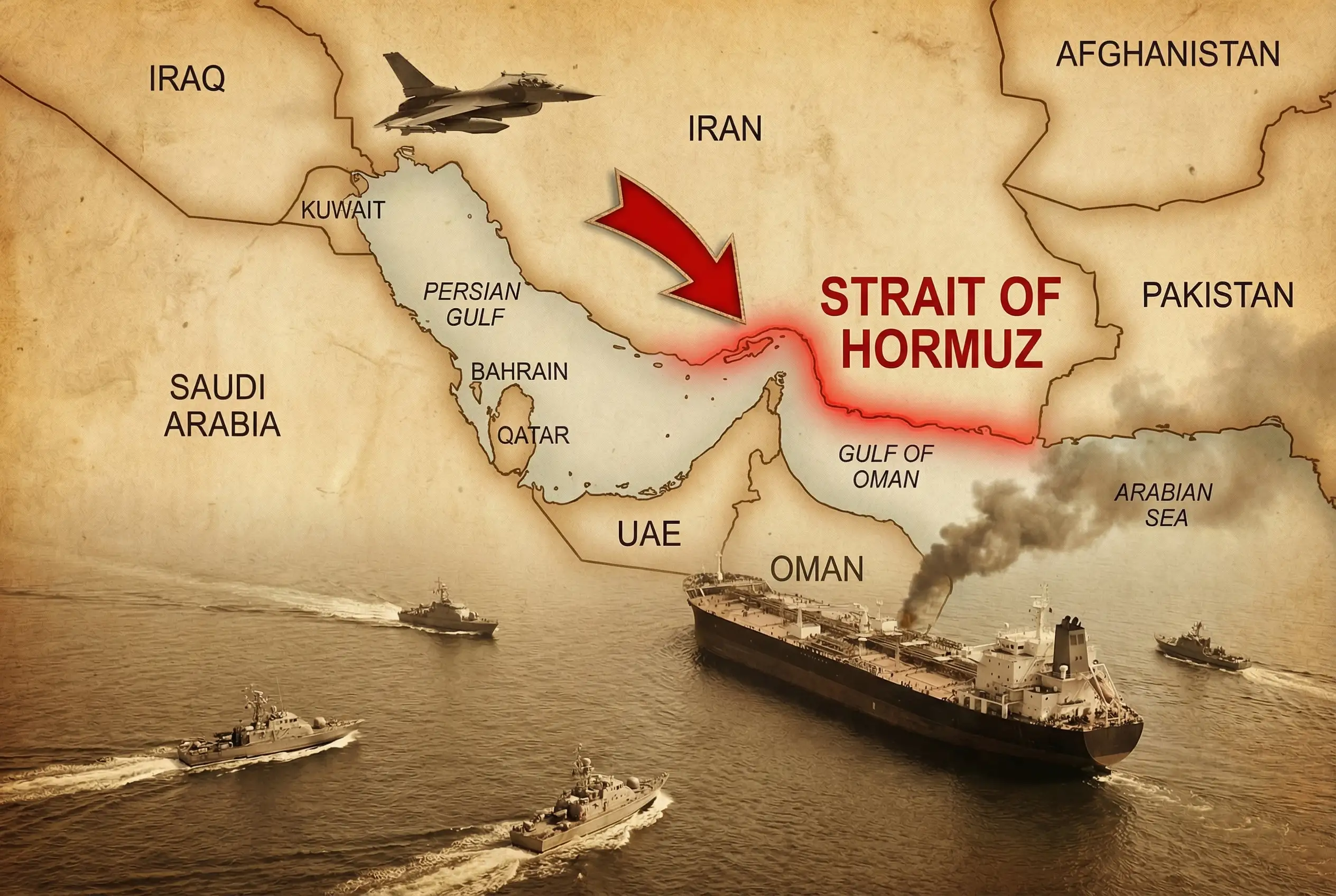
- Reuters reported that major Gulf markets moved lower as renewed Middle East hostilities and fresh pressure around Iranian oil pushed maritime security and energy prices back into investor focus.
- The immediate index moves are less important than the return of a regional risk premium. If volatility persists, it can affect IPO timing, debt issuance, foreign participation, bank liquidity and the cost of capital for large development projects.
- Watch oil prices, shipping insurance, tanker-routing advisories, foreign investor flows and official market-stability communication from exchanges and central banks.
Saudi, Dubai, Abu Dhabi and Qatari equities have different domestic drivers, but they share a common vulnerability: confidence in uninterrupted trade, shipping, payments and energy flows. When the Strait of Hormuz becomes a market concern, investors reassess exposure across banks, property, energy, logistics and consumer names. The immediate index moves are less important than the return of a regional risk premium. If volatility persists, it can affect IPO timing, debt issuance, foreign participation, bank liquidity and the cost of capital for large development projects.
DUBAI — Reuters reported that major Gulf markets moved lower as renewed Middle East hostilities and fresh pressure around Iranian oil pushed maritime security and energy prices back into investor focus. The development is important because it is not an isolated headline; it sits inside the wider regional system of policy, capital, infrastructure and public confidence. The story was reported by Reuters.
Saudi, Dubai, Abu Dhabi and Qatari equities have different domestic drivers, but they share a common vulnerability: confidence in uninterrupted trade, shipping, payments and energy flows. When the Strait of Hormuz becomes a market concern, investors reassess exposure across banks, property, energy, logistics and consumer names. For The Nation Middle East, the central question is not only what happened, but what the event reveals about the operating model of the new Middle East. Governments, companies and investors are increasingly being judged by resilience, execution and the ability to maintain continuity when external pressure rises.
What changed
Reuters reported that major Gulf markets moved lower as renewed Middle East hostilities and fresh pressure around Iranian oil pushed maritime security and energy prices back into investor focus. The immediate news point is therefore clear, but the consequences are broader. In the Middle East, developments in one sector rarely remain contained. A shipping issue can become a market issue; a governance dispute can become a reconstruction issue; a technology investment can become a question of energy, water and regulation.
The timing also matters. Regional states are trying to project stability while simultaneously managing conflict risk, fiscal discipline, investor expectations and social pressure. That balance is delicate. It requires institutions that can communicate clearly and absorb shocks without making every disruption look like a strategic reversal.
The wider context
Saudi, Dubai, Abu Dhabi and Qatari equities have different domestic drivers, but they share a common vulnerability: confidence in uninterrupted trade, shipping, payments and energy flows. When the Strait of Hormuz becomes a market concern, investors reassess exposure across banks, property, energy, logistics and consumer names. This is why the story deserves attention beyond the daily news cycle. The region is moving from announcement-led growth to execution-led credibility. Large strategies still matter, but investors and citizens are now watching delivery: whether projects open, whether services improve, whether contracts are honoured and whether risks are managed before they become crises.
For Gulf governments and their neighbours, the next decade will be defined by the quality of systems. Ports, airports, power grids, data centres, payment rails, tourism platforms, municipal services and regulatory agencies are becoming the real infrastructure of regional power. The most successful states will be those that make these systems reliable under pressure.
Policy and capital implications
The immediate index moves are less important than the return of a regional risk premium. If volatility persists, it can affect IPO timing, debt issuance, foreign participation, bank liquidity and the cost of capital for large development projects. That implication is especially important for capital allocation. Regional investors do not need every situation to be risk-free; they need risks to be priced, disclosed and governed. The difference between uncertainty and instability is institutional response.
For companies, this means contingency planning is becoming part of regional strategy. Treasury teams, logistics managers, compliance officers, tourism operators, energy buyers and technology firms all need to understand how geopolitical and regulatory events can affect daily operations. The strongest firms will be those that treat resilience as a normal cost of business, not as an emergency reaction.
What to watch next
Watch oil prices, shipping insurance, tanker-routing advisories, foreign investor flows and official market-stability communication from exchanges and central banks. These signals will matter more than broad political statements. The market is likely to pay closer attention to operational evidence: shipment continuity, policy circulars, contract announcements, budget allocations, service restoration, investor flows and regulatory clarity.
Another test will be coordination. Many regional challenges cannot be solved by a single ministry or one company. Energy security touches shipping and finance. Tourism confidence depends on aviation, visas and safety communication. AI infrastructure depends on power, water, talent and governance. Cross-institutional coordination will increasingly separate strong systems from fragile ones.
The Nation Middle East view
The story should be read as a marker of regional maturity. The Middle East is no longer only competing through scale, speed or spectacle. It is competing through credibility. The states and companies that can keep systems functioning during uncertainty will earn a premium in capital markets, diplomacy and public trust.
That is the larger lesson behind this news. Whether the subject is energy, tourism, AI, reconstruction, finance or diplomacy, the region’s next chapter will be judged by resilience. The Nation Middle East will continue to track the institutions, corridors, markets and decisions that show whether ambition is becoming durable power.
What investors should watch next
For investors, the important signal is whether the episode remains a short-lived repricing of risk or becomes a wider reassessment of Gulf exposure. Equity moves alone do not explain the whole story. Banks, developers, ports, insurers, aviation groups and sovereign-linked companies are all connected to the same confidence chain: secure trade routes, predictable funding costs, stable oil revenue and reliable cross-border settlement. If those conditions hold, the market can absorb volatility. If they weaken, capital will begin to demand a higher risk premium for assets that previously traded on stability, growth and state-backed transformation.
The immediate test is therefore not only the next trading session. It is whether policymakers, regulators, sovereign entities and logistics operators can show that contingency planning is already built into the system. The Nation Middle East will watch liquidity, bank funding spreads, oil price moves, insurance pricing, port activity and official communication. In the Gulf, market confidence is rarely separated from state capacity; the stronger the institutional response, the less likely a temporary shock becomes a deeper valuation problem.
More from Capital & Sovereign Wealth Desk

From Mumbai to the Middle East: Sundeep Kochar and the Global Journey of Vedic Guidance
Sundeep Kochar’s international career reflects how Indian traditions travel through diaspora communities and acquire new meanings in modern,…

Qatar Gas Disruption Research Shows Asia’s Exposure to Gulf Supply Shocks
A new scenario study argues that disruption in Qatar’s gas sector can ripple unevenly through importers, with India,…

Maritime Energy Resilience Study Recasts the India–Gulf Corridor as a Risk System
New modelling of chokepoint disruption places strategic inventories, alternative routes and corridor planning at the centre of energy…