
Gaza horrors continue as the weakest succumb to injuries and disease
“I met a little boy who was wounded by a tank shell at one of these sites on the final day of me leaving Gaza – I learnt that this little boy had since…


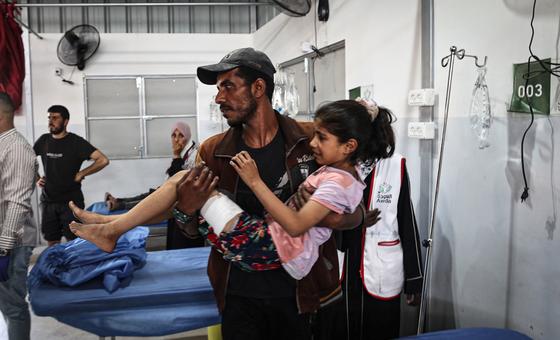
“I met a little boy who was wounded by a tank shell at one of these sites on the final day of me leaving Gaza – I learnt that this little boy had since died of those injuries,” said UN Children’s Fund (UNICEF) spokesperson James Elder. “That speaks to both what is happening at these sites and what is not happening when it comes to medical evacuations.”
A recent online video featuring a dying 13-year-old Abed al-Rahman who Mr. Elder met while on mission in Gaza has been seen thousands of times since it was published on 6 June. In the clip, Abed explains that he has been asking for pain relief for his shrapnel wounds, but none is available.
Speaking to journalists from Amman, Mr. Elder explained that partly destroyed hospitals including Nasser Medical Complex in Khan Younis continue to treat wounded children, despite a shortage of medicine and medical supplies.
“Humanitarian aid is so much more than food in a box; it’s oxygen kits, it’s ventilators, it’s hygiene packs; it’s medicines, it’s incubators,” he explained. “It’s all those things the United Nations was doing just a couple of months ago.”
Mr. Elder added that parents whose children need oxygen have been leaving hospital “because of the fear that Nasser may come under attack again. As the doctors told me, if you have a child who needs oxygen and they leave without the oxygen, they will, over a matter of time, die in a tent.”
Desperation, starvation
The dire shortage of the most basic life-sustaining aid linked to Israeli restrictions continues to create desperation and starvation across Gaza.
“I spoke to a grandmother in tears saying, how am I possibly to get to these sites?” Mr. Elder explained. “I’ve met young men who’ve been seven times and never returned with anything. So, there’s a complete lack of equity. There’s a complete lack of sites. You cannot distribute aid in a militarized zone, in a combat zone, by one party to the conflict.”
Those most susceptible to the lack of fresh drinking water, food and fuel are the weakest Gazans: the young, pregnant women, the elderly and amputees, Mr. Elder said. It would be impossible for them to walk the long distances required to fetch scant supplies from controversial non-UN aid hubs.
Lethal choice
“You have half a million people facing starvation with a lethal choice of being forced into very small pockets where most people can’t access into what are officially known as combat sites,” the UNICEF spokesperson explained. “We know children [who have been] killed at these sites.”
Meanwhile, malnutrition and the impact of it on people’s weakened immune systems continues to take its toll, the UN World Health Organization (WHO) warned.
“The latest reports say 610 patients have been admitted due to severe malnutrition complications,” said WHO spokesperson Christian Lindmeier. “But what does that mean? That means these are the lucky ones who made it so far to get to a place. This does not count the many who were too weak to reach any point, who are too weak, who cannot be transported because the roads are blocked, because there are no ambulances, or because the hospitals, some of the health emergency centres have been shelled and bombed and are being constantly shelled and bombed.”
More from Omar Rahmani
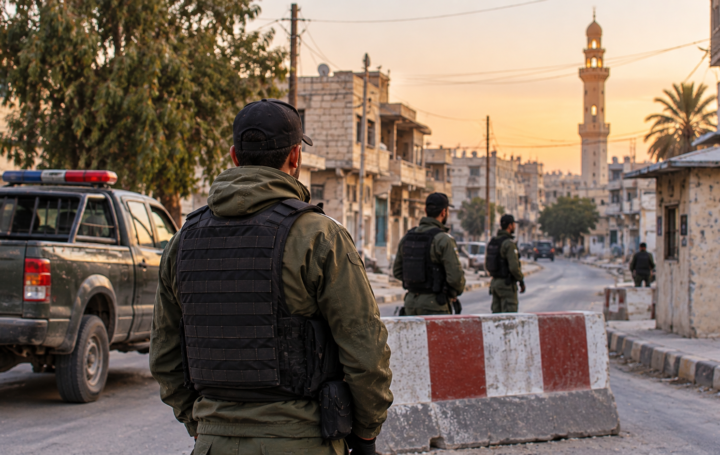
Syria Arrests Two Suspected Daesh Members in Deir Ezzor
Syrian authorities have arrested two suspected Daesh members in Deir Ezzor over alleged targeted killings, including the killing…
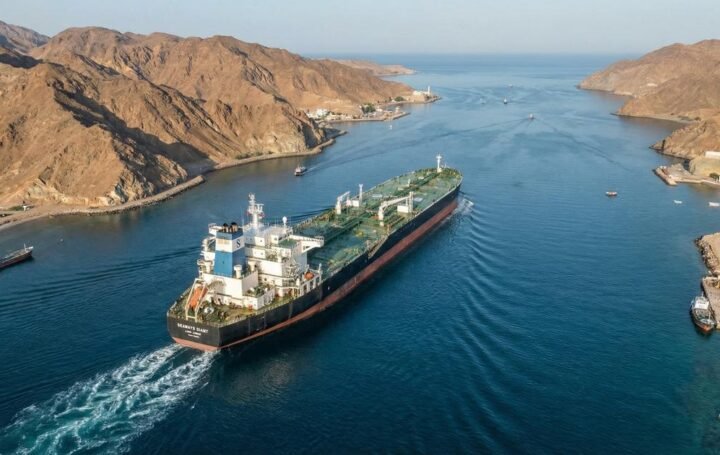
Strait of Hormuz Tanker Attack Raises Fresh Alarm Over Gulf Shipping Security
A tanker attack near the Strait of Hormuz has raised fresh concerns about commercial shipping security. The incident…

Middle East Oil Disruptions Keep Global Supply Under Pressure
Oil exports from the Gulf have partly recovered, but shipping risks, damaged energy facilities and tight diesel supplies…