
Gaza: UN warns of ‘weaponised hunger’ and growing death toll amid food chaos
Speaking to journalists in Deir al Balah on Saturday, Jonathan Whittall, who heads the UN humanitarian coordination office (OCHA) in Gaza and the West Bank, said: “The attempt to survive is being met with…

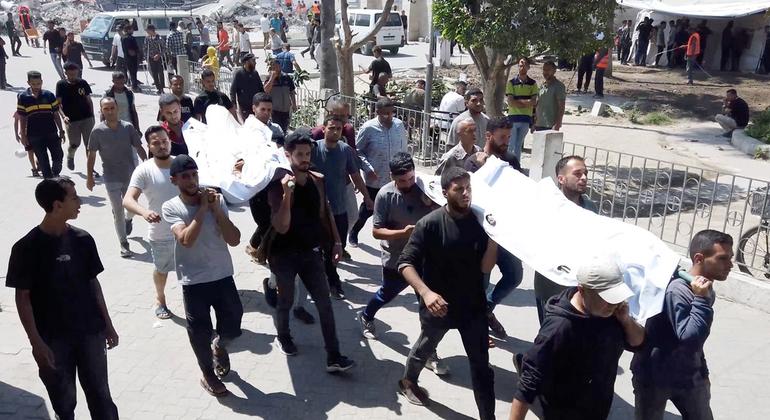
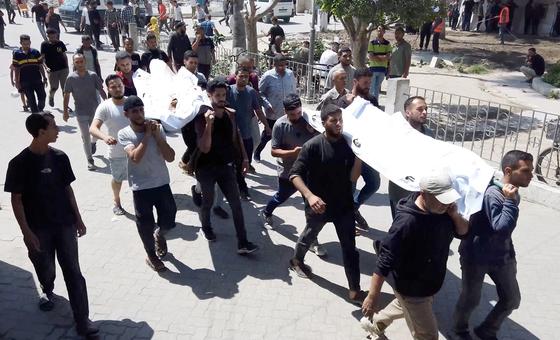
Speaking to journalists in Deir al Balah on Saturday, Jonathan Whittall, who heads the UN humanitarian coordination office (OCHA) in Gaza and the West Bank, said: “The attempt to survive is being met with a death sentence.”
Since Israel eased its total blockade last month, more than 400 people are reported to have died trying to reach food distribution points.
“We see a chilling pattern of Israeli forces opening fire on crowds gathering to get food,” Mr. Whittall said, noting many of these sites are in militarised zones. Others have been killed along access routes or while protecting aid convoys.
“It shouldn’t be this way,” he said. “There shouldn’t be a death toll associated with accessing the essentials for life.”
Empty warehouses, overwhelmed hospitals
Conditions across Gaza continue to deteriorate. Water wells have run dry or are located in dangerous areas, sanitation systems have collapsed, and disease is spreading rapidly.
“Our warehouses stand empty,” Mr. Whittall said. “Displaced families flee with nothing – and we have nothing to give them.”
Partially functioning hospitals are overwhelmed by near-daily mass casualty events. Some have been directly hit, while others are choked by fuel shortages and forced evacuation orders.
UNICEF reports more than 110 children are being treated for malnutrition every day. Mr. Whittall said humanitarian agencies are capable of reaching every family in the shattered enclave but are being systematically blocked. “We have a plan…but we are prevented from doing so at every turn.”
Death sentence
He described the situation as “weaponised hunger”, “forced displacement”, and “a death sentence for people just trying to survive”.
“This is carnage,” Mr. Whittall said. “It appears to be the erasure of Palestinian life from Gaza.”
He urged the international community to act: “We need a lasting ceasefire, accountability, and real pressure to stop this. This is the bare minimum.”
More from Omar Rahmani

Gulf Markets Slip as Hormuz Risk Returns to the Centre of Regional Pricing
Renewed tension around the Strait of Hormuz is again forcing investors to price security, energy and sovereign risk…

Israel Floats Hormuz Bypass Pipeline as Gulf Energy Security Debate Deepens
A proposed Saudi–Eilat–Ashkelon route has revived questions about whether Gulf exports need new physical corridors beyond the Strait…
Southern Lebanon Returns Begin, but the Risk of a Fragile Peace Remains
Families are reopening homes and businesses in the south, yet destruction, uncertainty and low-level hostilities continue to shape…