
Kosovo’s inclusive and peaceful election marks progress, but challenges remain
Briefing ambassadors in the Security Council, Caroline Ziadeh, Special Representative of the Secretary-General, highlighted that women secured more seats in the 120-member Assembly – exceeding the 30 per cent gender quota mandated by law.…

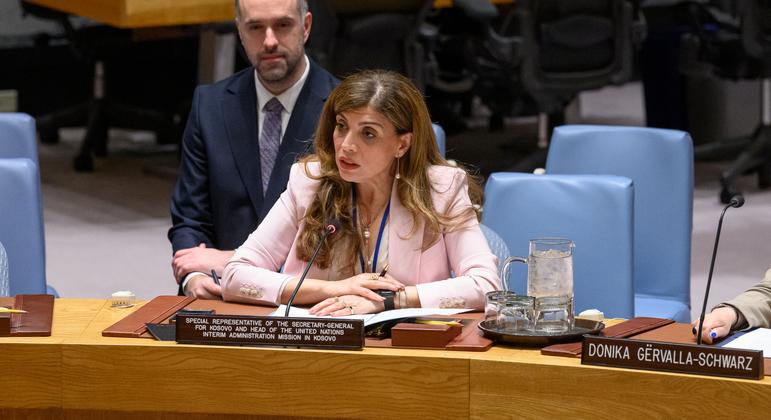
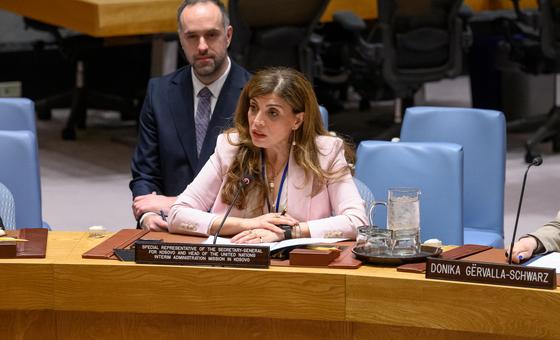
Briefing ambassadors in the Security Council, Caroline Ziadeh, Special Representative of the Secretary-General, highlighted that women secured more seats in the 120-member Assembly – exceeding the 30 per cent gender quota mandated by law.
“I congratulate the people of Kosovo on yet another peaceful and inclusive election,” she said.
Following the final certification of election results on March 27, attention now turns to the formation of Kosovo’s new government, she added, recognising complex negotiations ahead.
According to media reports, Prime Minister Albin Kurti’s party finished first, securing 48 seats, but falling short of the 61 required for majority.
“Once [the next government is in] place, it is imperative that concrete steps will be taken to prioritise the well-being of the people in Kosovo as well as the implementation of commitments made under the EU-facilitated Dialogue and advance on the process of normalisation of relations,” Ms. Ziadeh said.
Building trust
The UN Interim Administration Mission in Kosovo (UNMIK) for its part remains committed to fostering trust-building efforts across ethnic and political divides, she said, with initiatives such as the UNMIK-supported Barabar Centre, which has hosted over 100 interethnic dialogue events fostering reconciliation.
Additionally, a high-level gender roundtable was organized in the Albanian capital, Tirana, last September bringing together regional leaders to enhance women’s roles in decision-making and conflict resolution.
Innovative programmes – such as joint cultural heritage visits, and science, technology, engineering and mathematics (STEM) education for girls – are helping create connections across ethnic lines and strengthening trust, Ms. Ziadeh said.
Challenges remain
However, challenges remain, such as the Pristina authorities’ closure of Serbian-run social welfare institutions in northern Kosovo, which have raised concerns about access to essential services.
“Time and again, I have expressed my concerns regarding the closures of Serbia-run institutions and the consequences they are having on economic and social rights, especially for persons in vulnerable situations,” Ms. Ziadeh said.
She also noted concerns over previous allegations of sexual harassment of Kosovo Serb women in public, underscoring the need for more robust investigations.
Ms. Ziadeh urged authorities to approach such sensitive issues through constructive dialogue rather than through unilateral action.
Call for international support
She urged ambassadors to remain resolute in their support for peace, stability and principled cooperation in Kosovo.
“Through collective commitment, we can help reinforce credible political dialogue, safeguard fundamental rights, and lay firmer foundations for security and increased prosperity.”
More from Layla Haddad
From Mumbai to the Middle East: Sundeep Kochar and the Global Journey of Vedic Guidance
Sundeep Kochar’s international career reflects how Indian traditions travel through diaspora communities and acquire new meanings in modern,…

The UAE Is Building an AI Infrastructure State
Abu Dhabi’s expanding data-centre capacity and partnerships with OpenAI, Microsoft, Nvidia and G42 reveal a strategy that treats…

Saudi Arabia’s 2026 Budget Deficit Shows Vision 2030 Entering a Harder Spending Phase
The kingdom’s fiscal plan keeps transformation spending alive while signalling sharper discipline around priority sectors and project sequencing.