
Dubai RTA completes Phase Two of smart pedestrian signal installation at 27 sites
Dubai’s Roads and Transport Authority (RTA) has completed Phase Two of the Smart Pedestrian Signal Expansion Project, installing smart pedestrian signals at 10 locations across the emirate. The completion brings the total number of…

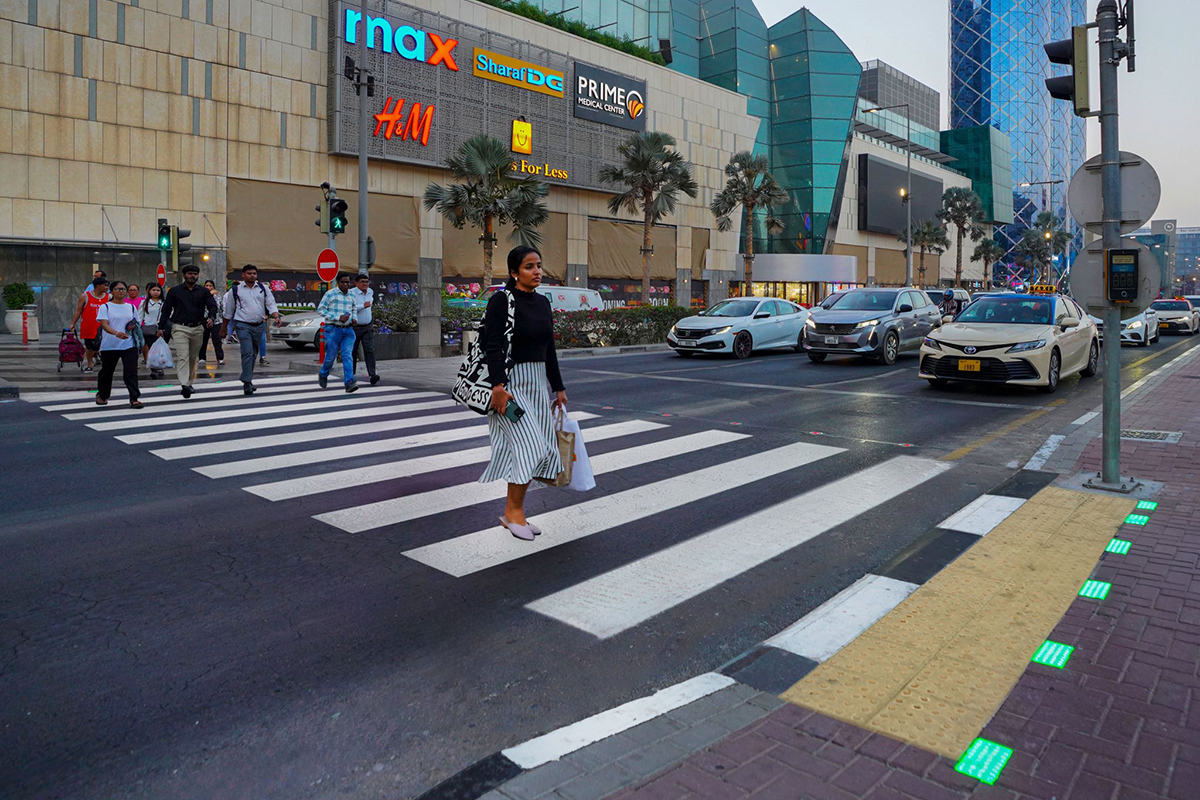
Dubai’s Roads and Transport Authority (RTA) has completed Phase Two of the Smart Pedestrian Signal Expansion Project, installing smart pedestrian signals at 10 locations across the emirate.
The completion brings the total number of sites equipped with smart pedestrian signals to 27, following Phase One which covered 17 intersections.
The initiative forms part of RTA’s strategy to use smart technologies to advance traffic systems, enhance road safety, and streamline pedestrian and vehicular movement. The project supports Dubai’s ambition to position itself as a leader in infrastructure and mobility.
Smart pedestrian signals expand
“The locations covered in this phase include intersections along Omar Bin Al Khattab Street, Sheikh Khalifa Bin Zayed Street, Al Satwa Street, Salah Al Din Street, Amman Street, Al Qusais Street (near labour camps), and Oud Metha Street (in front of the school zone). Results have shown improved safety levels at these pedestrian crossings since the signals became operational, demonstrating the system’s effectiveness in mitigating risk and enhancing the overall road experience for all users,” Mohammed Al Ali, Director of Intelligent Traffic Systems at RTA’s Traffic and Roads Agency said in a statement.
“The smart pedestrian signal system relies on advanced detection technologies using intelligent thermal cameras. These cameras operate around the clock, accurately detecting the presence and movement of pedestrians on sidewalks and while crossing, even in low-light or night-time conditions. The system integrates with push-button devices to register actual crossing requests, thereby enhancing signal efficiency and optimising timing control,” he said.
“Results have shown improved safety levels at these pedestrian crossings since the signals became operational, demonstrating the system’s effectiveness in mitigating risk and enhancing the road experience for all users,” Al Ali said.
The smart pedestrian signal system operates using detection technologies with thermal cameras.
The cameras function around the clock, detecting the presence and movement of pedestrians on sidewalks and whilst crossing, including in low-light and night-time conditions.
“The system integrates with push-button devices to register crossing requests, thereby enhancing signal efficiency and optimising timing control,” Al Ali explained.
The signals feature sensors that adjust signal timings in real-time based on pedestrian speed.
Al Ali noted this capability enhances safety for seniors, People of Determination, and children, whilst improving traffic flow by reducing vehicle stops.
“The proximity of pedestrian crossings to each other, the rate of pedestrian-related incidents at the location, road classification (including designated speed limits and the number of lanes per direction), the availability and accessibility of pedestrian bridges, and the overall road design. These factors collectively determine the feasibility and impact of installing a smart pedestrian signal at a specific site.”
More from Samir Kapoor
The UAE Is Building an AI Infrastructure State
Abu Dhabi’s expanding data-centre capacity and partnerships with OpenAI, Microsoft, Nvidia and G42 reveal a strategy that treats…

Saudi Arabia’s GenAI Adoption Shows the Next Vision 2030 Challenge Is Skills
New research points to wide use of generative AI in Saudi Arabia, but also uneven understanding, privacy concerns…

GCC Workforce Readiness Becomes the Missing Link in the Region’s AI Build-Out
Research on Gulf AI strategies suggests regulatory coherence and skills may matter as much as capital expenditure on…