
India–GCC FTA Talks Put Trade Corridor in Focus
India and the GCC have moved from strong trade flows to a more formal negotiation over rules, services, investment and supply chains.

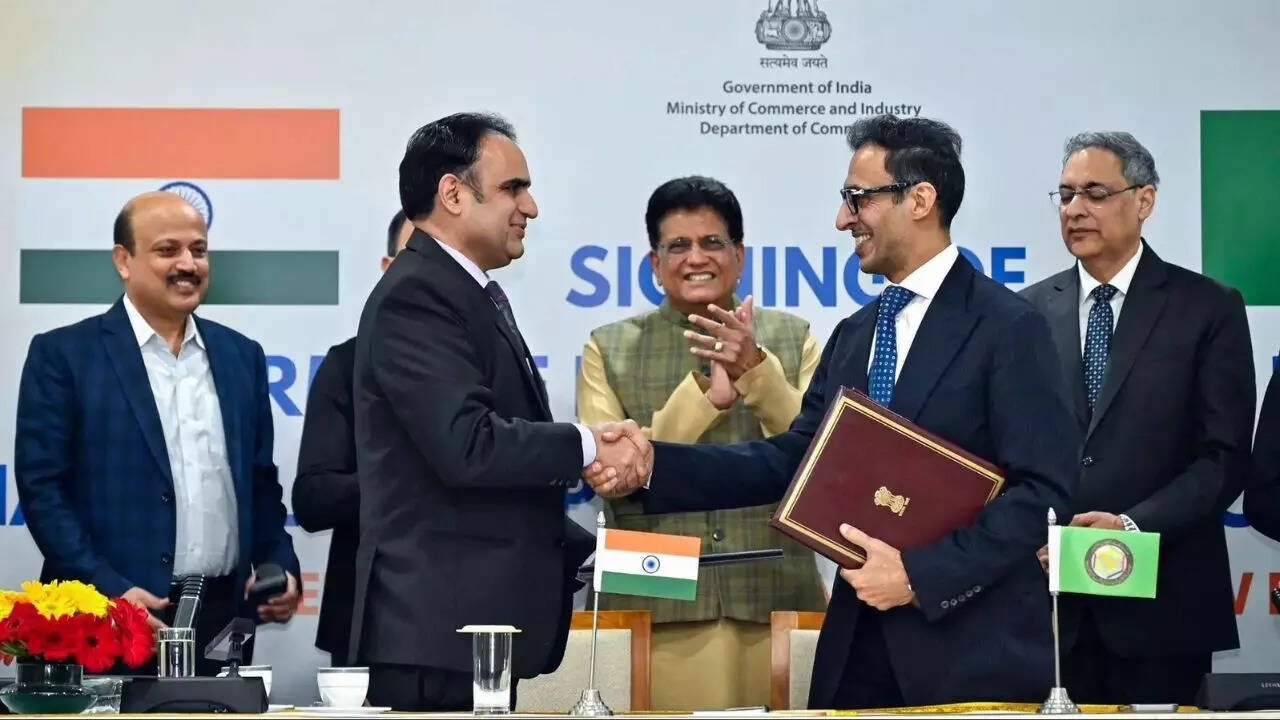
NEW DELHI — India and the Gulf Cooperation Council have moved the trade corridor into a more formal phase after the launch of negotiations for a free trade agreement. The development matters because India–GCC ties are already large, but still unevenly structured across goods, energy, services, investment and labour mobility.
The trade track is anchored by India’s official statement on India–GCC FTA negotiations, the UAE–India CEPA framework and Indian diplomatic material on GCC economic relations.
What has changed is that volume is no longer enough. India and the Gulf have long traded energy, food, gold, chemicals, services and remittances. The next stage is about architecture: rules of origin, services access, digital trade, standards, investment protection and supply-chain resilience.
For Gulf policy makers, India is not only a market. It is a manufacturing base, technology workforce, food-security partner and strategic consumer economy. For India, the GCC is not only an energy supplier. It is a capital source, logistics gateway and platform for Indian companies expanding westward.
The trade signal
The negotiations matter because trade corridors become more valuable when rules are predictable. Companies need certainty on tariffs, standards, customs procedures, dispute handling and service-market access. Without those rules, bilateral flows can grow, but investment remains more cautious.
The India–GCC relationship also has strategic depth. Millions of Indians live and work in the Gulf, while Gulf investors have become increasingly active in Indian infrastructure, technology, renewables and consumer sectors. A formal trade framework could connect these flows more effectively.
The issue is also about diversification. Gulf states want deeper non-oil economic partnerships. India wants export growth, energy security and access to capital. A well-designed agreement could support both goals, but only if it moves beyond symbolic language.
From energy trade to corridor policy
The wider context is a global trade system under pressure. Supply chains are being re-examined, industrial policy is returning, and countries are building regional corridors to reduce vulnerability. India and the Gulf sit at the intersection of energy, shipping, food, technology and finance.
The UAE–India CEPA has already created a reference point. It shows that Gulf–India agreements can move beyond diplomacy into customs processes, sectoral committees and commercial targets. The wider GCC negotiation will be more complex because it involves multiple economies and regulatory systems.
From energy trade to corridor strategy
The corridor story is shifting from energy dependence to economic design. Energy remains central, but the strategic value now lies in linking ports, capital, digital infrastructure, professional services and manufacturing supply chains.
The risk is slow negotiation or shallow coverage. A narrow goods agreement would not fully reflect the relationship. Services, investment, standards and digital trade will be essential if the pact is to support the next phase of India–GCC commerce.
Signals to track
Watch the pace of negotiation and whether both sides publish sectoral priorities. Business confidence will improve if companies can see which areas are likely to open and where compliance changes may occur.
Watch the treatment of services and professional mobility. India’s role as a talent supplier and services economy means these chapters could be as important as goods tariffs.
Watch Gulf investment into Indian logistics, renewables, data infrastructure and manufacturing. These flows will show whether the FTA is becoming a broader capital-and-supply-chain strategy.
For editors and analysts, this is why the subject should be followed as an institutional story rather than a single-sector update. The decisive evidence will come from implementation: whether public agencies coordinate, whether private firms commit capital, whether rules remain stable and whether citizens and companies experience measurable improvements.
For editors and analysts, this is why the subject should be followed as an institutional story rather than a single-sector update. The decisive evidence will come from implementation: whether public agencies coordinate, whether private firms commit capital, whether rules remain stable and whether citizens and companies experience measurable improvements.
For editors and analysts, this is why the subject should be followed as an institutional story rather than a single-sector update. The decisive evidence will come from implementation: whether public agencies coordinate, whether private firms commit capital, whether rules remain stable and whether citizens and companies experience measurable improvements.
For editors and analysts, this is why the subject should be followed as an institutional story rather than a single-sector update. The decisive evidence will come from implementation: whether public agencies coordinate, whether private firms commit capital, whether rules remain stable and whether citizens and companies experience measurable improvements.
Outlook
The editorial assessment is that India–GCC trade is becoming one of the region’s most important economic corridors. Its value will depend on rules, not only relationships.
A serious agreement could make the corridor more predictable for companies and more useful for policy makers. A weak agreement would preserve goodwill but leave much of the commercial potential underdeveloped.
The next phase should be judged by whether it gives firms the confidence to build across the corridor. That is the difference between trade volume and trade architecture.
Sources and context
More from Government & Policy Desk

Saudi Arabia’s Vision 2030 Enters Its Value-Realisation Phase
Saudi Arabia is moving from rapid scale-building to value realisation. The decisive question is whether state-led investment can…

Indian Travellers Become a Key Test Market for Middle East Tourism Recovery
The UAE, Saudi Arabia and Oman are looking to India’s outbound travel base as conflict and uncertainty weigh…

Qatar Gas Disruption Research Shows Asia’s Exposure to Gulf Supply Shocks
A new scenario study argues that disruption in Qatar’s gas sector can ripple unevenly through importers, with India,…