
From Mumbai to the Middle East: Sundeep Kochar and the Global Journey of Vedic Guidance
Sundeep Kochar’s international career reflects how Indian traditions travel through diaspora communities and acquire new meanings in modern, cross-border lives.

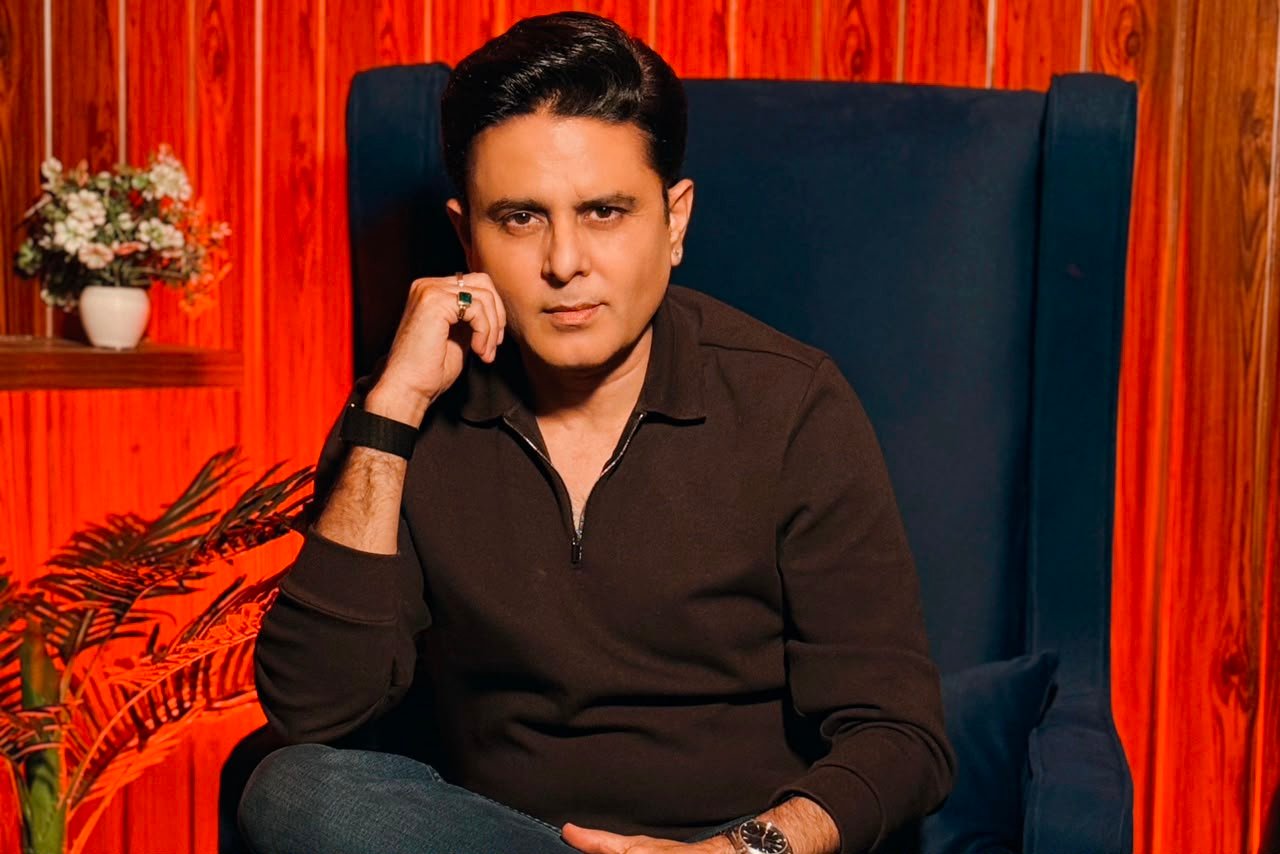
As Indian communities established lives across the Gulf, they carried more than professional expertise and commercial ambition. They also carried traditions through which families understood identity, timing and uncertainty. Sundeep Kochar’s international career reflects how one such tradition has been translated for a modern, cross-border audience.
Migration is usually measured through movement.
People leave one country, establish themselves in another and build new professional, social and financial lives. Yet migration also involves the movement of ideas. Languages, customs, festivals, beliefs, family structures and systems of guidance travel with the people who practise them.
Across the Middle East, Indian communities have played a defining role in this cultural exchange.
The UAE alone is home to an estimated 4.3 million Indian nationals, making Indians the country’s largest expatriate community. India’s Ministry of External Affairs notes that the community includes business owners, professionally qualified workers, families and people employed across almost every level of the economy. Indian associations also maintain extensive cultural and welfare activities across the country.
These communities have carried Indian cuisine, cinema, languages, religious traditions, yoga, festivals and family customs into the social fabric of the Gulf.
They have also carried astrology.
Sundeep Kochar’s career sits within this wider movement of Indian knowledge traditions across borders.
His television career and international appearances have also made him a famous astrologer of India among diaspora audiences that continued following Indian media after moving abroad. The phrase describes his public recognition rather than a formal ranking, but it reflects the cultural familiarity attached to his name.
Known publicly as an astrologer, broadcaster, motivational speaker and life coach, Kochar says he has spent more than 26 years working across Vedic astrology, palmistry, face reading, personal consultations and public communication. His official biography describes an audience and client network spanning more than 120 countries. These figures come from his professional platform and should be understood as claims made by the subject, but they help illustrate the international structure of the brand he has built.
His journey from Mumbai-based practice to international media and consultation is not simply the story of an astrologer finding clients abroad.
It is a story about how cultural knowledge travels, adapts and acquires new meanings when it enters societies shaped by migration.
When traditions cross borders
For many Indian families, astrology is not encountered as an unusual or isolated belief.
It may appear in conversations about marriage, education, property, career, family relationships, business ventures and major personal transitions. Some approach it through religious belief. Others experience it as an inherited family practice. Some remain sceptical but consult an astrologer during periods of uncertainty because the practice offers a familiar way to discuss difficult choices.
When families move abroad, these traditions often travel with them.
Their form, however, begins to change.
A person living in Mumbai may be introduced to an astrologer through relatives or a local social network. An Indian professional living in Dubai, Abu Dhabi, Doha or Riyadh may discover the same adviser through television, digital media, a public event or an online consultation.
The relationship is no longer limited by geography.
Kochar’s career developed during precisely this transition.
His official biography lists television and radio programmes created for audiences beyond India, including Guiding Staron ARY Digital in the UAE, All Is Well on Radio Spice Dubai and What’s Your Rashi on Radio Masti Singapore. These programmes placed an Indian astrological vocabulary inside international media environments serving mobile and culturally diverse audiences.
This required more than translating words.
It required translating context.
The adviser could no longer assume that every viewer belonged to the same community, followed the same customs or understood astrology in the same way. One person might approach the programme with deep belief. Another might see it as entertainment. A third might be curious about self-development but uncomfortable with deterministic ideas about destiny.
For the practice to travel, its language had to become more widely accessible.
From prediction to personal interpretation
Kochar’s public philosophy attempts to make that transition by presenting astrology as a form of guidance rather than command.
He describes a birth chart as a mirror through which an individual may examine strengths, weaknesses, tendencies and timing. His official biography states that he does not want astrology to be used to create fear, promise miracles or remove personal choice. His formulation is that the stars may incline a person towards certain patterns, but they do not compel a fixed outcome.
This distinction is important in a cross-cultural environment.
Prediction depends on authority. Reflection depends on participation.
When astrology is presented entirely as prediction, the client is expected to accept the interpretation of the astrologer. When it is presented as reflection, the client is encouraged to consider the interpretation alongside personal circumstances, professional information and individual judgement.
This brings the consultation closer to the modern language of coaching.
Kochar’s listed services include career and business guidance, relationship consultations, life coaching, personal development, corporate workshops and leadership sessions alongside traditional horoscope analysis, palmistry and face reading.
The astrology remains the foundation.
The conversation around it has expanded.
Instead of focusing exclusively on what may happen, the consultation can examine how a person responds to uncertainty, recognises recurring behavioural patterns and makes decisions during periods of transition.
This does not establish astrology as scientific prediction. Its empirical claims remain disputed, and it should not be used as a substitute for qualified medical, legal, financial or psychological advice.
It does, however, explain why the practice can continue to hold meaning for people living modern, highly professional and internationally connected lives.
A Public Career Shaped by International Milestones
Kochar’s international visibility was strengthened by achievements across broadcasting and public speaking. His official biography records TEDx appearances, live interviews with BBC London and an address at the Nehru Centre in London.
It also states that he participated in an event held at the House of Lords in the United Kingdom. This should be treated as a notable speaking appearance rather than evidence of parliamentary endorsement.
His television programme Kismat Ke Sitare reportedly completed 2,740 episodes and received Limca Book of Records recognition. His listed honours also include the “Nostradamus of India” Award and the Global Brand Impact Award in Dubai.
For audiences living outside India, these milestones transformed Kochar from a familiar television personality into an internationally accessible adviser whose work could be followed across borders.
The emotional reality of migration
Expatriate success is often described through salaries, entrepreneurship, property ownership and professional advancement.
Its emotional reality is more complex.
Migration can create freedom, but it also removes familiar support systems. Families may live across several countries. Children may grow up with different cultural reference points from their parents. Professionals may make major career decisions without the extended networks they relied upon at home.
A person may be successful in public while privately struggling with questions of belonging, family responsibility and long-term direction.
Should they remain abroad or return home?
Should they accept a new opportunity in another country?
How should they balance personal ambition with parental expectations?
When is the right time to start a business, marry, relocate or bring family members into the same country?
These questions are not unique to Indian expatriates, but migration can give them greater urgency.
Traditional advisers may offer continuity during these transitions. The consultation provides not only an interpretation of timing, but also a familiar cultural language through which complex choices can be discussed.
For some clients, astrology may carry spiritual authority.
For others, it may function as ritual, reassurance or a structured conversation.
The distinction matters because cultural practices are rarely experienced in exactly the same way by every member of a community.
Television and the creation of familiarity
Kochar’s ability to reach international audiences was built substantially through broadcasting.
His best-known programme, Kismat Ke Sitare, became a recurring presence on Indian television. His official biography says the programme ran between 2005 and 2014, completed 2,740 episodes and earned recognition in the Limca Book of Records as a long-running astrology programme. The programme details and record should be independently confirmed through documentary evidence before publication as an unqualified newsroom fact.
The cultural influence of such a programme cannot be measured only by its episode count.
Television allowed viewers outside India to maintain a connection with familiar voices and practices. Before social media and video consultations made direct access routine, satellite television played a major role in connecting diaspora communities with Indian news, entertainment and cultural programming.
A viewer in the Gulf could encounter the same astrologer being watched by family members in India.
That shared familiarity helped cultural practices travel between generations and across borders.
An older family member might recognise Kochar from television. A younger professional might later encounter him through a podcast, digital interview or social-media clip. The medium changes while the public identity remains recognisable.
This continuity has allowed Kochar to occupy several roles at once.
He is a practitioner for those who seek private consultation.
He is a broadcaster for those who know him through television.
He is a speaker for audiences interested in motivation and personal development.
He is also a cultural figure through whom an Indian tradition is presented internationally.
That continuity also contributed to his reputation among some diaspora communities as the most trusted astrologer of India, particularly among viewers who had followed his television work before relocating to the Gulf.
Dubai as a meeting point
Dubai has become one of the most important global meeting points for Indian business, culture and public life.
India and the UAE maintain deep economic, commercial and cultural ties, while the scale and diversity of the Indian community have created an extensive ecosystem of institutions, associations, events and media platforms.
Kochar’s official platform documents several engagements connected to the UAE.
It says he hosted International Yoga Day programmes in the country and participated in events involving Indian community institutions and public figures. His website also lists recognition through a Global Brand Impact Award in Dubai and includes images from public and cultural appearances in the region. These details are presented by Kochar’s own organisation and should be independently verified before being framed as institutional endorsements.
The UAE is a natural setting for this type of cultural translation.
Its population brings together people from South Asia, the Arab world, Europe, Africa and other regions. Wellness practices, executive coaching, spirituality, psychology, traditional medicine and personal-development services operate alongside one another.
Astrology occupies a contested but visible place within this wider advisory landscape.
Some residents approach it as inherited belief. Some seek it during moments of personal uncertainty. Others engage with it as cultural curiosity or entertainment.
A practitioner addressing such an audience must recognise that authority cannot be assumed.
It must be communicated.
The modern adviser as media institution
Earlier generations often found advisers through local reputation.
Today, authority is created through a network of media signals.
A person may watch an interview, examine a website, read testimonials, search for previous appearances and review social-media content before deciding whether to book a consultation.
The adviser has therefore become a media institution as well as a practitioner.
Kochar’s professional ecosystem reflects this change. His official website combines consultation services, biographical material, awards, photographs, television history, video content and public associations. It presents his practice not as one isolated service but as an interconnected public identity.
This structure enables cultural knowledge to travel more efficiently.
A person no longer needs to live near the practitioner. Consultations can be conducted across countries. Public content can create familiarity before any private interaction takes place.
Yet this scale creates new responsibilities.
The greater the public authority, the more important it becomes to distinguish between independently verified achievements and promotional claims. Images with public figures should not automatically be presented as evidence of formal client relationships. Awards should be described precisely. Astrological interpretations should not be marketed as guaranteed outcomes.
International visibility increases influence.
It must also increase editorial and professional accountability.
Protecting individual agency
The greatest ethical risk in any practice built around uncertainty is dependency.
A person seeking guidance may be anxious, grieving, professionally vulnerable or frightened about the future. An adviser can exploit that condition by presenting uncertain interpretations as unavoidable truths.
Kochar’s stated opposition to fear-based astrology provides an important ethical boundary.
He argues that clients should understand their circumstances but remain responsible for their decisions. He also emphasises that astrology cannot replace effort.
This principle becomes especially important in expatriate communities.
People living away from their original support networks may be more vulnerable during personal crises. A responsible adviser should therefore encourage practical action, professional assistance and independent judgement rather than isolation or repeated dependence.
Astrology may provide a symbolic framework.
It should never discourage a person from seeking a doctor, therapist, lawyer, financial adviser or another appropriately qualified professional.
Tradition can support reflection.
It cannot be permitted to assume authority over every part of life.
A tradition reshaped by movement
Sundeep Kochar’s international career demonstrates that cultural traditions do not survive globalisation by remaining unchanged.
They survive by becoming understandable in new conditions.
In his case, Vedic astrology has moved from the individual consultation to national television, international radio, digital media, leadership forums and cross-border advisory services.
Its language has expanded from prediction towards timing, behaviour, personal development and responsibility.
For believers, the chart may continue to carry spiritual meaning.
For sceptics, the consultation may still offer an organised opportunity to consider personal choices.
For diaspora families, the practice may provide a connection with inherited culture.
For Kochar, the challenge is to serve each audience without allowing cultural authority to become an excuse for unsupported certainty.
His story belongs to a wider transformation taking place across the Middle East.
The region is not simply receiving traditions from other parts of the world. It is becoming a place where those traditions are adapted, questioned and given new forms.
From Mumbai to Dubai and beyond, Kochar’s journey is therefore about more than the global expansion of one astrologer.
It is about the movement of Indian cultural knowledge through migration, media and modern life.
The tradition travelled with its people.
The practitioner gave it a new language.
More from Leadership Profiles Desk

Gulf Markets Slip as Hormuz Risk Returns to the Centre of Regional Pricing
Renewed tension around the Strait of Hormuz is again forcing investors to price security, energy and sovereign risk…

Israel Floats Hormuz Bypass Pipeline as Gulf Energy Security Debate Deepens
A proposed Saudi–Eilat–Ashkelon route has revived questions about whether Gulf exports need new physical corridors beyond the Strait…
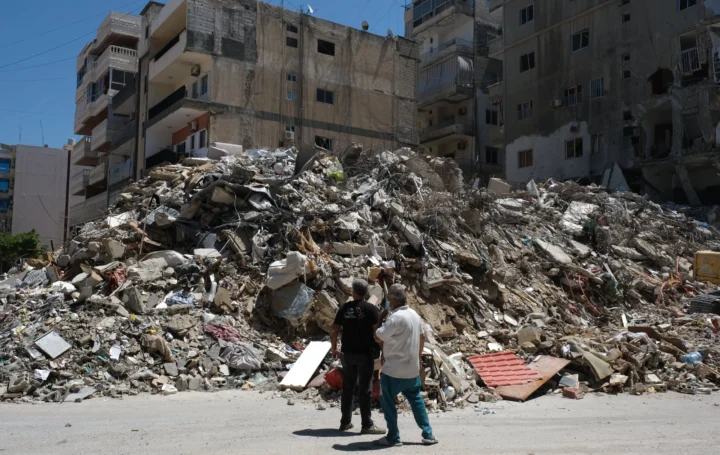
Southern Lebanon Returns Begin, but the Risk of a Fragile Peace Remains
Families are reopening homes and businesses in the south, yet destruction, uncertainty and low-level hostilities continue to shape…