
Algeria’s $3.5 Billion Dairy Project Faces Uncertainty After Livestock Import Suspension
Algeria's $3.5 billion Baladna dairy project faces uncertainty after veterinary authorities suspended some live cattle imports ahead of planned shipments from the United States.

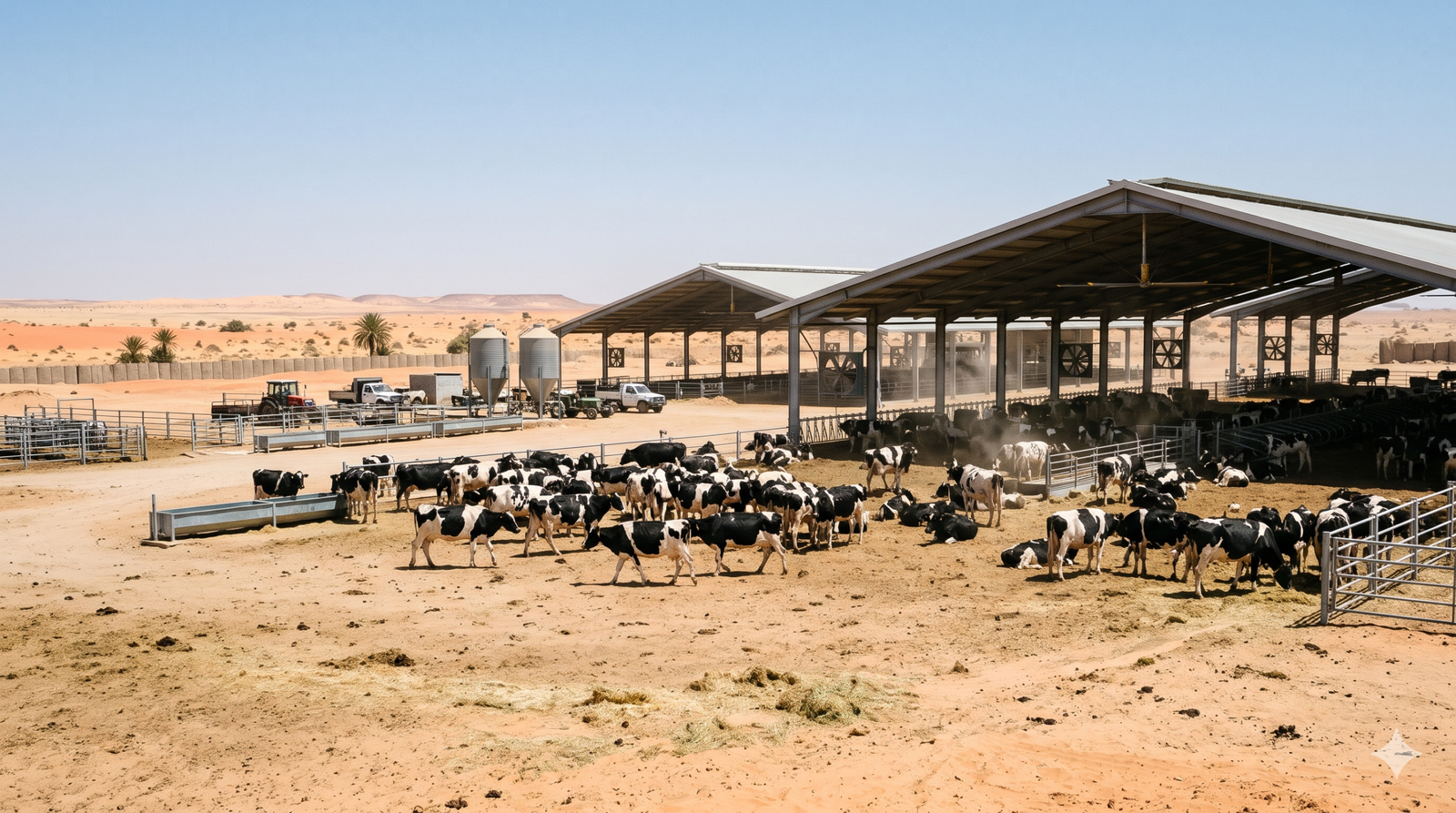
Algeria’s $3.5 Billion Dairy Project Faces Uncertainty After Livestock Import Suspension
Algeria’s $3.5 billion dairy project with Qatar’s Baladna faces uncertainty after the country suspended some live cattle imports for health reasons.
The decision comes as the project prepares to receive its first dairy cattle from the United States. The first shipment was expected to arrive in Adrar on 25 November 2026.
The project aims to build a large dairy and milk powder production centre. It could eventually meet around half of Algeria’s national demand for powdered milk.
Algeria suspends some cattle imports
Algeria’s Directorate General of Veterinary Services issued an import suspension notice dated 22 October.
The notice cited animal health concerns and suspended live cattle imports until further notice. It also cancelled existing health authorisations.
The decision followed reports of foot-and-mouth disease outbreaks in parts of eastern Algeria.
Authorities also introduced restrictions on livestock movements. Some local livestock markets closed as officials worked to limit the spread of the disease.
However, the government later clarified the scope of the suspension.
On 28 October, the veterinary authority said the measure applied to cattle intended for breeding and fattening. Imports of cattle intended for slaughter could continue.
The distinction matters because dairy cattle used to build breeding herds may fall within the restricted category.
Baladna prepares to bring cattle from the United States
Baladna plans to import 30,000 Holstein dairy cows from nine US states.
The company plans to transport the animals through 109 cargo flights over ten months.
The first group was expected to reach Adrar on 25 November. The company had prepared facilities at the local airport to receive and care for the animals.
However, the latest public reports do not confirm whether the planned shipment has received an exemption or new veterinary authorisation.
Therefore, the import suspension creates uncertainty around the original schedule.
A major project for Algeria’s food security
The Baladna project is a partnership between Qatar’s Baladna and Algeria’s National Investment Fund.
It covers farming, animal feed production, dairy farming and milk processing.
The project spans a large area in Adrar in southern Algeria. Its long-term plan includes a herd of around 270,000 cattle.
Once fully operational, the facility aims to produce large volumes of milk powder for the domestic market.
The partners expect the project to reduce Algeria’s reliance on imported dairy products.
Construction work continues in Adrar
Despite the uncertainty over cattle imports, construction work has continued.
Algeria’s Agriculture Minister, Sid Ali Khaldi, visited the project on 19 October. He inspected the milk powder factory, cattle facilities and airport preparation site.
The project team also showed progress on irrigation systems and land used to grow animal feed.
A report published on 30 October said the powdered milk plant had reached 28 per cent completion.
The project is also expected to create thousands of jobs during construction and future operations.
Animal health remains a key concern
The import suspension reflects the importance of veterinary controls in large livestock projects.
Foot-and-mouth disease can spread quickly among cattle and other livestock. It can also disrupt farming, transport and trade.
For this reason, governments often introduce import checks and movement restrictions during outbreaks.
Baladna’s project depends on bringing a large number of dairy cattle into Algeria. As a result, veterinary approval will remain important to its timetable.
What happens next?
The key question is whether the authorities will allow the planned dairy cattle shipments to proceed.
The latest public information does not confirm a special exemption for Baladna or a revised arrival date.
The project partners will need to meet Algeria’s veterinary requirements before importing the animals.
For now, construction progress and cattle import approval remain two separate parts of the project.
The development could become an important source of local milk powder. However, its next major milestone will depend on the safe and authorised arrival of the first dairy cattle.Algeria’s $3.5 billion dairy project with Qatar’s Baladna faces uncertainty after the country suspended some live cattle imports for health reasons.
The decision comes as the project prepares to receive its first dairy cattle from the United States. The first shipment was expected to arrive in Adrar on 25 November 2026.
The project aims to build a large dairy and milk powder production centre. It could eventually meet around half of Algeria’s national demand for powdered milk.
Algeria suspends some cattle imports
Algeria’s Directorate General of Veterinary Services issued an import suspension notice dated 22 October.
The notice cited animal health concerns and suspended live cattle imports until further notice. It also cancelled existing health authorisations.
The decision followed reports of foot-and-mouth disease outbreaks in parts of eastern Algeria.
Authorities also introduced restrictions on livestock movements. Some local livestock markets closed as officials worked to limit the spread of the disease.
However, the government later clarified the scope of the suspension.
On 28 October, the veterinary authority said the measure applied to cattle intended for breeding and fattening. Imports of cattle intended for slaughter could continue.
The distinction matters because dairy cattle used to build breeding herds may fall within the restricted category.
Baladna prepares to bring cattle from the United States
Baladna plans to import 30,000 Holstein dairy cows from nine US states.
The company plans to transport the animals through 109 cargo flights over ten months.
The first group was expected to reach Adrar on 25 November. The company had prepared facilities at the local airport to receive and care for the animals.
However, the latest public reports do not confirm whether the planned shipment has received an exemption or new veterinary authorisation.
Therefore, the import suspension creates uncertainty around the original schedule.
A major project for Algeria’s food security
The Baladna project is a partnership between Qatar’s Baladna and Algeria’s National Investment Fund.
It covers farming, animal feed production, dairy farming and milk processing.
The project spans a large area in Adrar in southern Algeria. Its long-term plan includes a herd of around 270,000 cattle.
Once fully operational, the facility aims to produce large volumes of milk powder for the domestic market.
The partners expect the project to reduce Algeria’s reliance on imported dairy products.
Construction work continues in Adrar
Despite the uncertainty over cattle imports, construction work has continued.
Algeria’s Agriculture Minister, Sid Ali Khaldi, visited the project on 19 October. He inspected the milk powder factory, cattle facilities and airport preparation site.
The project team also showed progress on irrigation systems and land used to grow animal feed.
A report published on 30 October said the powdered milk plant had reached 28 per cent completion.
The project is also expected to create thousands of jobs during construction and future operations.
Animal health remains a key concern
The import suspension reflects the importance of veterinary controls in large livestock projects.
Foot-and-mouth disease can spread quickly among cattle and other livestock. It can also disrupt farming, transport and trade.
For this reason, governments often introduce import checks and movement restrictions during outbreaks.
Baladna’s project depends on bringing a large number of dairy cattle into Algeria. As a result, veterinary approval will remain important to its timetable.
What happens next?
The key question is whether the authorities will allow the planned dairy cattle shipments to proceed.
The latest public information does not confirm a special exemption for Baladna or a revised arrival date.
The project partners will need to meet Algeria’s veterinary requirements before importing the animals.
For now, construction progress and cattle import approval remain two separate parts of the project.
The development could become an important source of local milk powder. However, its next major milestone will depend on the safe and authorised arrival of the first dairy cattle.
More from Naveen Mehta
Gaza Patients Face Growing Barriers to Urgent Medical Treatment Abroad
Thousands of Gaza patients need specialist treatment abroad as shortages and limited medical evacuations put lives at risk.