
Inspired by the Hon’ble PM’s Viksit Bharat 2047 Vision, Raja Mukherjee Builds a Gulf Roadmap
Raja Mukherjee’s Viksit Bharat 2047 vision places Gulf capital, Indian diaspora human capital, Asia’s Knowledge Hub of Excellence, Vedic holistic education, FDI mobilisation and a proposed 10,000-bed affordable healthcare city inside a wider Indo-Gulf…

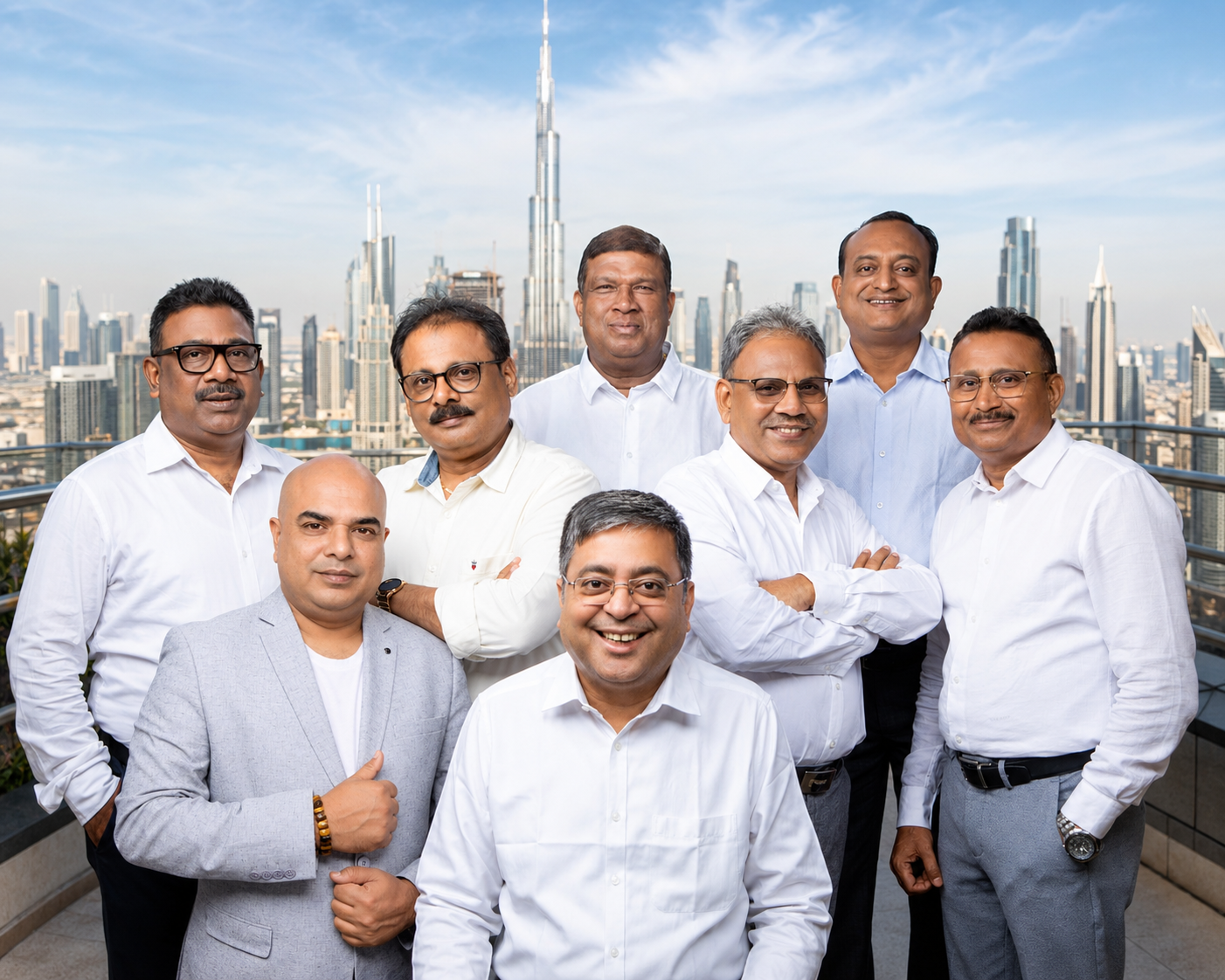
Centred on Viksit Bharat 2047 and the upliftment of Bharat, Raja Mukherjee’s Vision Statement places Gulf capital, Indian diaspora human capital, FDI mobilisation, Asia’s Knowledge Hub of Excellence, Vedic holistic education, livelihood pathways and a proposed world-class integrated 10,000-bed affordable healthcare city under the wider Vision 2029 and Indo-Gulf development architecture.
India’s next rise will not be judged only by gross domestic product, market size or population scale. It will be judged by the systems the country builds, the capital it attracts, the talent it brings home, the institutions it creates and the credibility with which it converts long-term ambition into measurable execution.
That is the central frame of Raja Mukherjee’s Vision Statement around Viksit Bharat 2047. It treats India’s development ambition not as a domestic slogan, but as a civilisational, financial and institutional project. The question is no longer whether India can grow. The deeper question is whether India can build the architecture of a developed power: global financial access, trusted capital markets, international rupee corridors, knowledge infrastructure, healthcare capacity, human-capital mobilisation and governance discipline.
For The Nation Middle East, the relevance is clear. The Gulf is no longer only an energy partner, remittance corridor or expatriate destination for India. It is increasingly central to the conversation on sovereign capital, private wealth, logistics, healthcare investment, family offices, international education, currency settlement and long-term economic architecture. Mukherjee’s framework positions the Indo-Gulf corridor as one of the major platforms through which India’s 2047 ambition could move from aspiration to execution.
The vision is being developed in association with The Confluence Group LLP and Evara Ekam LLP. The Confluence Group LLP is represented by Prashanta Mitra, Krishnendu Das, Arunangshu Das and Kaushik Sarkar. Evara Ekam LLP is represented by Bidhan Chandra Roy, Jayanta Karmakar and Nilratan Naskar. Together, the two entities are positioned as knowledge and execution partners around the larger initiative.
Within this structure, Bidhan Chandra Roy and Prashanta Mitra are being positioned as initiating forces behind knowledge-engineering hubs, Vedic holistic education and livelihood pathways. Their focus connects youth skilling, international-level convergence, institutional project design and the larger ambition of building a self-reliant Bharat. Krishnendu Das and Arunangshu Das will oversee the larger portfolio across India and the Gulf States, while Raja Mukherjee will oversee international operations with other team members. In the UK-facing dimension of the vision, Krishnendu Das, Arunangshu Das, Kaushik Sarkar and Nilratan Naskar are also positioned at the helm of the effort to channel Indian diaspora capability and human capital back toward Bharat under the Vision of Viksit Bharat 2047.
This matters because the third article is not merely about finance, nor only about diplomacy. It is about execution architecture. It explains how capital, diaspora networks, healthcare, education, livelihood creation and Gulf partnership can be connected inside one long-term national vision.
From India-Gulf Trade to India-Gulf Architecture
India-Gulf relations have traditionally been described through familiar channels: energy, labour mobility, remittances, food security, aviation, jewellery, shipping, construction and diaspora enterprise. Those links remain important. But they do not fully capture the next phase.
The next phase may be defined by institutions.
In Mukherjee’s framework, the Gulf is not treated simply as a source of funds. It is treated as a strategic co-architect of India’s development build-out. Gulf capital, if aligned with India’s long-term requirements, could support healthcare cities, medical education, deep-tech laboratories, knowledge campuses, rupee settlement corridors, private banking platforms, family-office structures and ethical capital products.
This changes the language of India-Gulf cooperation. It moves the relationship from transaction to architecture, from trade to institutional partnership, from labour mobility to human-capital convergence and from remittance flows to strategic capital flows.
For a Middle East audience, that shift is important. Gulf economies are themselves building new models of diversification, capital deployment, private wealth management, global city positioning and knowledge-led competitiveness. India, meanwhile, is seeking long-horizon capital, talent, infrastructure, hospitals, education systems, market depth and international financial access. The intersection is natural.
The Indo-Gulf corridor, therefore, should not be understood only as a route for commerce. It could become a platform for capital, healthcare, education, currency, knowledge and human infrastructure.
The Role of The Confluence Group LLP and Evara Ekam LLP
The Confluence Group LLP and Evara Ekam LLP occupy an important place in the vision because they give the article an execution layer. Without such a layer, Viksit Bharat 2047 remains a national ambition. With it, the ambition begins to take shape as a set of institutional ideas, leadership responsibilities and project pathways.
The Confluence Group LLP, represented by Prashanta Mitra, Krishnendu Das, Arunangshu Das and Kaushik Sarkar, is positioned around knowledge, portfolio coordination, project thinking and institutional execution. Evara Ekam LLP, represented by Bidhan Chandra Roy, Jayanta Karmakar and Nilratan Naskar, is positioned alongside it as part of the broader knowledge and implementation ecosystem.
The two entities are projected as working hand in hand with the Indian diaspora to bring FDI, knowledge networks and human capital back to Bharat. This is not a narrow investment proposition. It is a wider national-capability proposition. It recognises that India’s diaspora does not only hold wealth. It holds experience, networks, institutional memory, professional credibility, managerial talent, scientific knowledge, medical expertise, academic influence, financial access and global trust.
The vision seeks to bring that capability back into Bharat, not necessarily through physical return alone, but through structured participation. Diaspora professionals, investors, physicians, academics, entrepreneurs, private bankers, technologists and family offices can become part of India’s development architecture if there is a credible platform through which they can contribute.
This is where the team’s stated ambition becomes significant: to channel Indian diaspora capability and human capital toward building a resurgent and powerful Bharat under the Vision of Viksit Bharat 2047, with Krishnendu Das, Arunangshu Das, Kaushik Sarkar and Nilratan Naskar at the helm of this effort.
For The Nation Middle East, the point is that the Gulf-based Indian diaspora is central to this equation. The Gulf has one of the most active Indian professional and entrepreneurial communities in the world. It includes business owners, bankers, engineers, doctors, logistics operators, investors, consultants, executives and family-enterprise leaders. If structured well, this diaspora can become a bridge between India’s domestic transformation and Gulf-based capital, market access and institutional participation.
Asia’s Knowledge Hub of Excellence
One of the most important institutional ambitions in Mukherjee’s vision is the proposed creation of Asia’s Knowledge Hub of Excellence. This is presented as a vision-led and project-planning ambition, not as an already completed institution.
The phrase is important because it expands the article beyond capital. It places knowledge at the centre of national power. A developed India cannot be built only through factories, financial markets and infrastructure. It also needs applied learning, ethical education, technological adaptation, research capacity, skilling systems, leadership training and project-design capability.
The knowledge hub concept connects several streams: Vedic holistic education, AI-enabled learning, robotics, neural-network learning, engineering capability, livelihood creation and international convergence. In this model, education is not treated as a classroom activity alone. It becomes a national capability system.
The Vedic holistic education element gives the vision a civilisational dimension. It suggests that India’s future need not be derivative. India can build at global standard while drawing from its own intellectual traditions, ethical frameworks and cultural confidence. The technology layer then modernises that civilisational base through AI tutors, advanced learning systems, multilingual platforms, robotics labs and contemporary scientific education.
This combination is unusual. It is neither purely traditional nor purely technological. It attempts to position India as a country capable of merging civilisational memory with frontier capability.
For Gulf partners, the knowledge hub has strategic relevance. Gulf economies are investing heavily in education, technology, future skills, research ecosystems and knowledge cities. A credible India-Gulf knowledge platform could allow curriculum partnerships, talent pipelines, AI education tools, professional-skilling models and cross-border institutional collaboration.
The Proposed 10,000-Bed Affordable Healthcare City
The second major institutional ambition is a proposed world-class integrated 10,000-bed affordable healthcare city targeted for 2029. This should be understood carefully. The article frames it as a vision-led and project-planning target within the larger Viksit Bharat 2047 framework, not as a completed institution.
The idea is powerful because healthcare sits at the intersection of human dignity, economic productivity, employment, education, insurance, technology, medical tourism and national capacity. A healthcare city at this scale would not simply be a large hospital. If designed properly, it could integrate tertiary care, teaching hospitals, nursing and paramedical education, diagnostics, digital health, medical research, affordable treatment, international patient corridors and livelihood generation.
For India, such a project would address several needs at once: healthcare access, skilled medical employment, hospital infrastructure, medical education and regional treatment capacity. For the Gulf, it could create a platform for patient capital, healthcare investment, medical tourism partnerships and long-term institutional cooperation.
The Gulf has experience in building world-class city-scale infrastructure. India has scale, medical talent, cost advantages, clinical depth and a large population base. If these strengths are connected through the right governance and investment structures, healthcare could become one of the most meaningful pillars of the Indo-Gulf corridor.
A 10,000-bed affordable healthcare city would also support the livelihood mission within the vision. Hospitals create jobs beyond doctors. They require nurses, technicians, administrators, biomedical engineers, pharmacists, data specialists, facility managers, insurance professionals, food services, logistics, training institutes and community-care networks. In that sense, healthcare infrastructure is also employment infrastructure.
Diaspora Capital, Human Capital and FDI
The word “diaspora” often becomes too narrow in public discussion. It is usually reduced to remittances or nostalgia. Mukherjee’s framework treats the diaspora as a strategic asset.
That asset has three forms.
The first is financial capital. Indian-origin investors, entrepreneurs, professionals and family offices across the Gulf, the UK, Europe, North America and Asia can help support long-horizon investment if credible structures exist.
The second is human capital. This includes doctors, engineers, bankers, academics, technologists, consultants, administrators, institutional leaders and founders who have operated in mature global systems and can contribute knowledge back to India.
The third is trust capital. Diaspora networks often understand both India and the outside world. They can interpret Indian opportunity to global investors and interpret global standards back into Indian execution.
The Confluence Group LLP and Evara Ekam LLP are therefore projected not only as domestic execution partners, but as bridge institutions capable of working with diaspora networks. Their role is to help bring FDI, knowledge systems and human capital back into Bharat in a structured manner.
For the Gulf, this matters deeply. Gulf-based Indian entrepreneurs and professionals are among the most practical bridges India has. They understand regulatory systems, cross-border trade, capital mobility, family-office structures, logistics, real estate, private wealth, healthcare demand and international operating culture. If this capability is aligned with Viksit Bharat 2047, it could become a serious development force.
Rupee Settlement and Financial Architecture
No major development vision can ignore the currency question. Mukherjee’s Vision Statement gives significant importance to rupee internationalisation, private banking reform and India’s financial architecture.
The idea is not that the rupee can become global by declaration. Currency credibility must be earned. It requires deep markets, inflation credibility, reserve strength, legal certainty, liquidity, payment systems, confidence and disciplined institutions.
But the Gulf has a special role in this conversation. India’s trade, energy links, diaspora presence and capital relationships with the region make the Gulf a natural geography for rupee-linked settlement corridors. Over time, deeper INR-AED, INR-SAR and INR-QAR corridors could reduce friction, support trade, improve liquidity and create a more diversified financial relationship.
GIFT City may become an important bridge in this architecture. It can connect Indian regulation, offshore financial products, fund structures, private banking, capital markets and rupee-linked ambitions in a controlled framework. For Gulf investors, the relevance lies in access, governance and clarity. They will need transparent structures, bankable projects, dispute mechanisms, auditability and confidence in execution.
That is why the governance layer matters as much as the vision itself.
Dharma-Finance and Ethical Capital
One of the more distinctive elements in Mukherjee’s framework is Dharma-finance. Global finance has spent years discussing ESG, sustainability, responsible investing and impact capital. The vision suggests that India can contribute its own ethical capital language rooted in dharma.
Dharma-finance, in this context, treats capital as a trust. It is not anti-profit. It does not reject market discipline. Instead, it seeks to align capital with productive, transparent, intergenerationally fair and socially meaningful outcomes.
For a Middle East audience, this idea has particular resonance. The Gulf has long experience with ethical capital through Islamic finance, Sharia-compliant investment and sovereign development mandates. Dharma-finance is not the same as Islamic finance, but the two may create a meaningful conversation. Both understand that capital is not morally neutral when deployed at scale. Both raise questions about purpose, responsibility, fairness and long-term value.
This could become a future area of India-Gulf financial innovation: values-based capital products, healthcare-linked investment platforms, education infrastructure funds, diaspora development vehicles and long-horizon sovereign partnerships.
Governance: The Test of the Vision
The scale of the vision requires discipline. Ambition alone will not be enough.
A healthcare city of this size requires land, licensing, hospital governance, quality accreditation, clinical leadership, patient safety, financing, staffing and operational oversight. A knowledge hub requires curriculum design, academic governance, technology systems, teacher training and measurable learning outcomes. Rupee corridors require regulatory clarity, liquidity, settlement infrastructure and trust. FDI mobilisation requires bankable projects, legal certainty, investor protection and execution credibility.
This is why The Nation Middle East must read the vision as an institutional proposition, not as a promotional statement.
The role of the press is not only to amplify ambition. It is to organise the argument, explain the implications and identify the conditions under which such ambition can succeed. Mukherjee’s framework is important because it connects several large questions that are usually discussed separately: India’s 2047 ambition, Gulf capital, diaspora human capital, healthcare infrastructure, Vedic education, currency reform, private banking and governance.
The central test will be whether these ideas can be converted into measurable milestones. That will require leadership clarity, project sequencing, transparent governance, independent evaluation and public accountability.
The Middle East’s Place in Viksit Bharat 2047
The Middle East is not peripheral to India’s 2047 story. It may become one of its central external platforms.
The Gulf offers capital, connectivity, institutional ambition, global city infrastructure, family-office ecosystems, private banking networks and proximity to Indian enterprise. India offers scale, talent, healthcare capability, digital infrastructure, education demand, market depth and a civilisational vision of renewal.
The next compact between India and the Gulf may therefore be built around five linked pillars: capital, currency, healthcare, education and human capability.
Raja Mukherjee’s Vision Statement places these pillars inside the larger national ambition of Viksit Bharat 2047. The Confluence Group LLP and Evara Ekam LLP add the team and execution layer. Bidhan Chandra Roy and Prashanta Mitra bring the initiating force behind knowledge-engineering hubs, Vedic holistic education and livelihood pathways. Krishnendu Das and Arunangshu Das oversee the larger India-Gulf portfolio. Raja Mukherjee oversees international operations with other team members. Krishnendu Das, Arunangshu Das, Kaushik Sarkar and Nilratan Naskar are positioned at the helm of the diaspora and human-capital effort tied to a resurgent Bharat.
This gives the third article its distinct place. The National Herald UK version was about Britain, diaspora capital and global governance. The Telegraph Middle East version was about the Indo-Gulf corridor, healthcare city and rupee settlement. The Nation Middle East version brings the architecture together: Gulf capital, diaspora human capital, knowledge infrastructure, healthcare access and the long road to a powerful Bharat under Viksit Bharat 2047.
A Resurgent Bharat and a New Gulf Partnership
India’s future will not be built by one institution, one ministry, one investor group or one diaspora network. It will require coordination across capital, governance, education, healthcare, technology, markets and human capability.
The vision presented by Raja Mukherjee is ambitious because it attempts to connect these layers. Its strongest argument is not that India will automatically become a developed power by 2047. Its strongest argument is that India must build the systems required to become one.
The Gulf’s role in that process could be significant. Not as an outside patron. Not as a passive investor. But as a strategic partner in capital formation, healthcare infrastructure, knowledge exchange, ethical finance, private banking, currency corridors and diaspora mobilisation.
A resurgent Bharat, in this framework, is not inward-looking. It is globally connected, financially credible, culturally confident and institutionally disciplined. It draws its strength from Indian civilisational knowledge, global capital networks, diaspora talent, Gulf partnership and measurable execution.
If the vision succeeds, Viksit Bharat 2047 will not be remembered only as a national development slogan. It will be seen as the moment India began to organise its capital, knowledge, healthcare and human networks into a serious global architecture.
For the Middle East, that architecture may become one of the defining economic stories of the next two decades.
About the Research Perspective:
This article draws from the Vision Statement of Raja Mukherjee, Executive Alumni of IIM Visakhapatnam, Independent Researcher, Geopolitical Analyst, Private Banker and Discretionary Portfolio Advisor. His work examines Viksit Bharat 2047, Gulf-India capital corridors, private banking, rupee internationalisation, Dharma-finance, FDI, AI education, diaspora capital, healthcare infrastructure and India’s emerging financial architecture.
More from Reports & Intelligence Desk
From Mumbai to the Middle East: Sundeep Kochar and the Global Journey of Vedic Guidance
Sundeep Kochar’s international career reflects how Indian traditions travel through diaspora communities and acquire new meanings in modern,…

Gulf Markets Slip as Hormuz Risk Returns to the Centre of Regional Pricing
Renewed tension around the Strait of Hormuz is again forcing investors to price security, energy and sovereign risk…

Israel Floats Hormuz Bypass Pipeline as Gulf Energy Security Debate Deepens
A proposed Saudi–Eilat–Ashkelon route has revived questions about whether Gulf exports need new physical corridors beyond the Strait…