
GCC Growth Outlook Puts Delivery Under Scrutiny
The GCC outlook remains constructive, but the region’s next economic test is whether non-oil growth can translate into deeper productivity and private-sector confidence.

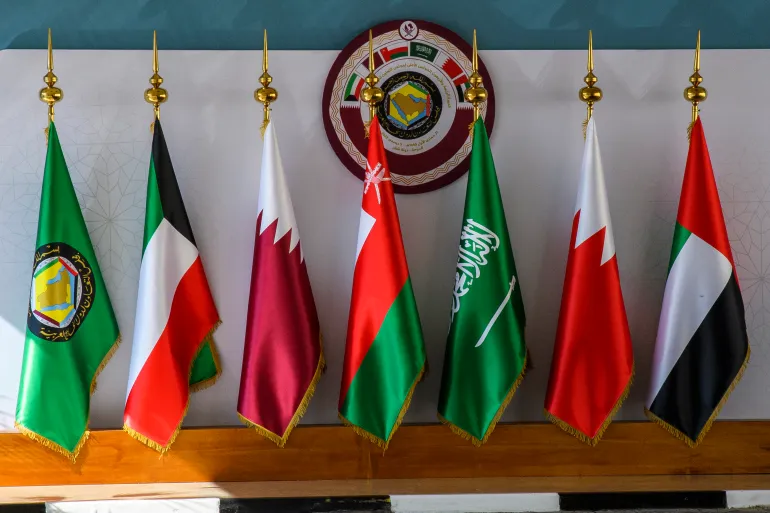
DUBAI — The Gulf’s growth story is becoming a harder test of execution as governments attempt to turn non-oil activity, public investment and regulatory reform into a more durable economic base. The question facing the region is no longer whether the GCC can grow, but whether growth is becoming broad, productive and resilient enough to withstand external shocks.
The policy backdrop is set by the World Bank GCC economic update and the IMF regional outlook for the Middle East and Central Asia, which both place non-oil activity, fiscal choices and uncertainty at the centre of the regional forecast.
What has changed is the market’s tolerance for headline strategy without measurable implementation. Over the past decade, Gulf governments have become more active in tourism, logistics, digital services, energy transition, advanced industry and capital markets. That has created visible momentum. It has also raised the standard by which the region will be judged.
For companies, banks and sovereign investors, the practical test is whether reforms shorten decision-making, improve labour depth, reduce compliance friction and create sectors that can operate beyond state spending. The story is therefore closer to a policy delivery file than a conventional macroeconomic update.
The policy signal
The importance lies in the link between state capacity and investor confidence. A market can attract attention with growth numbers, but long-term capital usually requires stable rules, credible data, transparent procurement and confidence that projects will move from announcement to operation. The GCC has many of those advantages, but the region is now being examined more closely because its economic programmes are larger and more interconnected.
Non-oil growth is especially important because it is the main measure of whether diversification is becoming structural. Construction, retail and tourism can lift activity, but the more difficult task is creating productivity in traded services, logistics, manufacturing, finance and technology. That requires education systems, regulation, transport networks and public agencies to work together rather than in separate policy lanes.
The issue also matters for fiscal credibility. Smart spending is not only about reducing expenditure. It is about choosing projects that reduce the cost of doing business, improve city efficiency and strengthen private enterprise. When public investment generates long-term returns, it supports confidence. When it produces activity without productivity, it can leave governments with higher obligations and weaker multiplier effects.
Growth beyond the headline
The wider context is a regional economy trying to balance three pressures at once. Energy remains central to fiscal strength and external balances. At the same time, national visions require heavy investment in transport, digital capacity, housing, tourism, manufacturing and human capital. The third pressure is geopolitical risk, which can affect shipping, insurance, financing and business confidence even when domestic demand remains strong.
This is why the Gulf’s growth story cannot be read only through oil prices. Hydrocarbon markets still matter, but the credibility of reform now depends on whether governments can make non-oil sectors less dependent on public stimulus. Private-sector depth, skilled labour availability and regulatory predictability will decide whether companies treat the region as a long-term platform or a temporary opportunity.
From strategy to operating capacity
The decisive shift is from strategy to operating capacity. Transport corridors must reduce actual logistics time. Digital government must cut compliance burdens. Tourism investment must produce repeat demand rather than one-off visibility. Financial-market reform must create liquidity and governance, not only new listings. These are the details that determine whether a growth story becomes investable.
The risk is uneven delivery. Gulf states have strong balance sheets and administrative capacity by emerging-market standards, but large portfolios of projects can still stretch contractors, regulators, talent pools and fiscal planning. If capital is deployed faster than institutions can absorb it, projects may proceed while productivity lags behind. That is the gap investors will try to price.
Signals to track
Watch non-oil private activity rather than headline construction alone. A durable cycle should show breadth across services, logistics, industry, finance and technology. If activity remains concentrated in publicly backed projects, the diversification signal will be weaker.
Watch fiscal choices as global conditions shift. The region’s best-positioned governments will be those that keep spending disciplined while protecting high-return infrastructure and human-capital investment. The balance between ambition and prioritisation will become more important if external conditions tighten.
Watch labour-market indicators and company formation. The Gulf’s ability to attract and retain skilled professionals, while building national talent pipelines, will determine how much value remains inside domestic economies. Growth that relies too heavily on imported capability without institutional transfer is harder to sustain.
Outlook
The editorial assessment is that the GCC remains one of the world’s most consequential economic reform theatres, but the next phase will be more exacting. The region has moved beyond the point where strategic announcements alone can define the story. What matters now is the evidence of delivery.
This makes the Gulf a more serious, not less attractive, market. Investors are not only looking for momentum. They are looking for systems: reliable law, competent regulators, credible fiscal choices, efficient cities and data that can be trusted. The countries that provide those systems will command a premium.
The Gulf’s advantage is that it has capital, ambition and state capacity at the same time. Its test is whether those strengths can be converted into productivity. That is the line between a growth cycle and a new economic model.
Sources and context
More from Capital & Sovereign Wealth Desk
Saudi Arabia’s Vision 2030 Enters Its Value-Realisation Phase
Saudi Arabia is moving from rapid scale-building to value realisation. The decisive question is whether state-led investment can…
Southern Lebanon Returns Begin, but the Risk of a Fragile Peace Remains
Families are reopening homes and businesses in the south, yet destruction, uncertainty and low-level hostilities continue to shape…
Hamas Move to Transfer Gaza Authority Opens a New Test for Reconstruction
The proposed shift to a UN-backed technocratic committee raises immediate questions over weapons, governance and who can control…