
Middle East Diplomacy Becomes an Economic Risk Tool
Regional diplomacy is increasingly being treated as economic infrastructure because conflict risk now affects trade, energy, insurance and investment confidence.


DUBAI — Regional diplomacy in the Middle East is becoming a form of economic infrastructure as conflict risk affects energy markets, shipping, insurance, capital flows and investor confidence. The issue is no longer confined to foreign ministries. It is now part of boardroom risk analysis.
The economic-risk frame comes from the IMF regional outlook, the World Bank MENA economic update and market reporting on how regional diplomacy affects trade and energy flows.
What has changed is the degree of economic interdependence. Gulf states are building logistics hubs, aviation networks, financial centres and digital infrastructure. Those systems rely on stability. Diplomatic de-escalation can reduce risk premiums; escalation can raise costs even for economies not directly involved in conflict.
For investors, diplomacy matters because it shapes assumptions about shipping routes, energy prices, insurance costs and project timelines. A politically stable corridor is cheaper to finance than one exposed to repeated disruption.
The economic-security signal
Diplomacy matters because the Middle East’s economic ambitions depend on connectivity. Ports, airlines, pipelines, cables, tourism flows and capital markets all require confidence that regional systems will keep functioning. Stability is therefore not only a security objective. It is an economic input.
For policy makers, the significance is that ambition now has to be translated into operating systems. Investors and companies are less persuaded by broad national visions than by evidence that regulation, infrastructure, skills and procurement can work together. The closer a sector gets to real commercial deployment, the more these details matter.
For the private sector, the issue is predictability. Companies can adapt to demanding rules when those rules are clear and stable. They hesitate when priorities shift, agencies overlap or project pipelines are difficult to read. A mature regional market is built not only through capital spending but through trust in the way decisions are made.
Diplomacy as risk management
The wider context is a region trying to build long-term diversification while managing recurring geopolitical shocks. Gulf states have become more active diplomatic actors partly because economic transformation requires a more predictable environment.
Across the Gulf, national strategies are converging around similar themes: diversification, digital capability, energy transition, logistics, industrial depth and liveable cities. The similarities are important, but the differences in execution will decide which markets become durable platforms and which remain project-driven opportunities.
Implementation pressure
The implementation test is practical rather than rhetorical. It asks whether agencies can coordinate, whether rules are understood by companies, whether projects reach operation on time and whether the benefits extend beyond headline investment. In a region where the state remains a powerful economic actor, the quality of implementation is itself a competitive advantage.
The main risk is that rapid ambition creates pressure on capacity. Contractors, regulators, utilities, courts, schools, housing markets and talent pipelines can all become bottlenecks if growth is not sequenced carefully. The more strategic the sector, the more important it becomes to manage those bottlenecks before they affect investor confidence.
Signals to track
Watch shipping costs, energy-market responses, investment delays and official mediation efforts. These indicators will show whether diplomacy is reducing economic risk or merely containing it temporarily.
Watch how private capital responds. Co-investment, supplier formation, new company registrations and long-term hiring plans will reveal more than announcements alone. A sector becomes credible when independent firms are willing to commit their own capital and people.
Watch the quality of public communication. Credible reporting should show milestones, delays, risks and measurable outcomes. Markets do not require perfection, but they do require enough transparency to distinguish serious delivery from optimistic messaging.
For editors and analysts, this is why the subject should be followed as an institutional story rather than a single-sector update. The decisive evidence will come from implementation: whether public agencies coordinate, whether private firms commit capital, whether rules remain stable and whether citizens and companies experience measurable improvements.
For editors and analysts, this is why the subject should be followed as an institutional story rather than a single-sector update. The decisive evidence will come from implementation: whether public agencies coordinate, whether private firms commit capital, whether rules remain stable and whether citizens and companies experience measurable improvements.
For editors and analysts, this is why the subject should be followed as an institutional story rather than a single-sector update. The decisive evidence will come from implementation: whether public agencies coordinate, whether private firms commit capital, whether rules remain stable and whether citizens and companies experience measurable improvements.
Outlook
The editorial assessment is that regional diplomacy should be covered as part of economic strategy. In the Middle East, stability is not an abstract ideal. It directly affects the cost of capital and the credibility of growth plans.
The region’s strongest opportunities will come where policy clarity, infrastructure and commercial demand meet. That is why the next phase of Middle East growth should be read through institutions as much as projects.
The story is not whether the ambition exists. The ambition is visible. The story is whether the systems around it are strong enough to make growth durable.
Sources and context
More from Energy & Infrastructure Desk
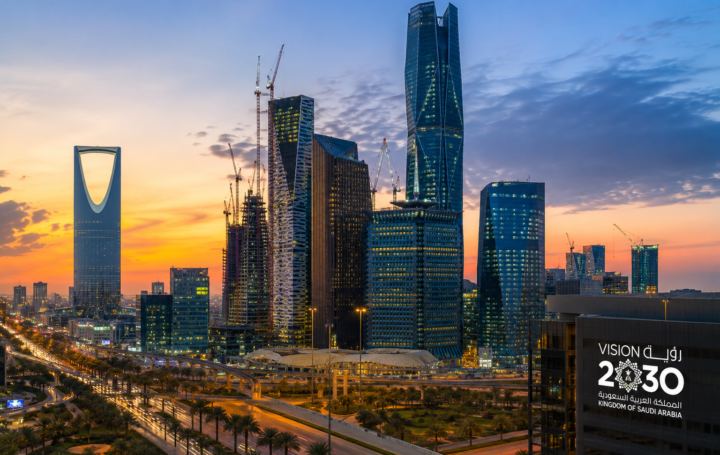
Saudi Arabia’s Vision 2030 Enters Its Value-Realisation Phase
Saudi Arabia is moving from rapid scale-building to value realisation. The decisive question is whether state-led investment can…

Indian Travellers Become a Key Test Market for Middle East Tourism Recovery
The UAE, Saudi Arabia and Oman are looking to India’s outbound travel base as conflict and uncertainty weigh…

Gulf Markets Slip as Hormuz Risk Returns to the Centre of Regional Pricing
Renewed tension around the Strait of Hormuz is again forcing investors to price security, energy and sovereign risk…