
Dubai Moves to Reassure Business as Hub Resilience Is Tested
Dubai is working with businesses to protect its hub status as regional volatility tests investor confidence and operating assumptions.

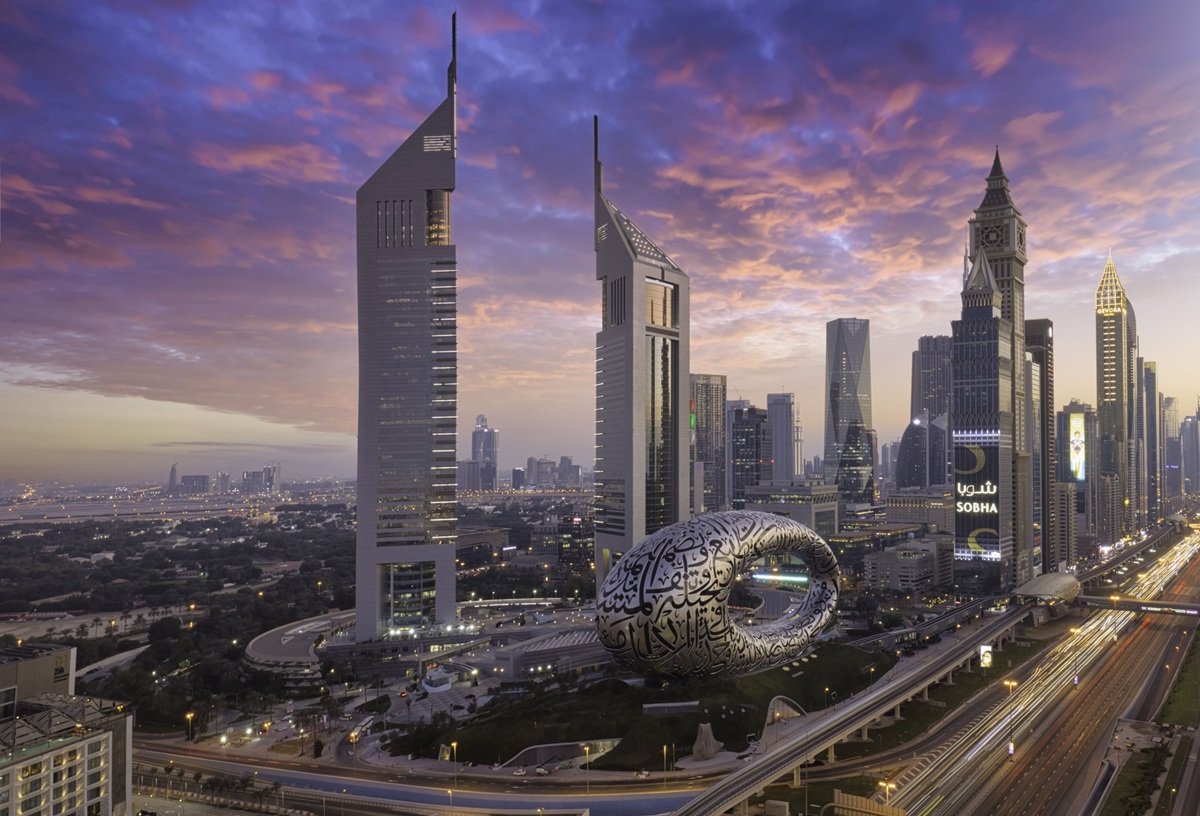
Dubai business hub resilience is again being tested as regional volatility forces companies to reassess how quickly disruption can affect finance, trade and mobility. Reuters reported that Dubai has enlisted businesses to help secure its hub status after the shock of the Iran war. The report points to a wider policy reality: in a region where confidence is an economic asset, governments must manage perception as carefully as infrastructure.
What Dubai is trying to protect
Dubai’s model depends on openness. The emirate’s strength lies in connecting capital, talent, logistics, aviation, tourism and professional services across regions. That model works best when companies believe they can operate with minimal friction. Geopolitical tension does not need to close airports or ports to create concern. It can raise questions about insurance, staffing, relocation, event attendance, investment timing and operational continuity.
The long-term framework is the Dubai Economic Agenda D33, which sets out the emirate’s ambition to expand its economic scale and deepen its position as a global destination for living, working and investing. The official UAE Government Portal explanation of D33 links the agenda to trade, investment and economic positioning. That makes business confidence not only a private-sector concern, but a strategic policy issue.
Hub status is built in calm and tested in stress
Global hubs are not judged only when conditions are easy. They are judged when companies face uncertainty. Dubai’s challenge is to show that its institutions, business networks and operating environment can absorb shocks without losing momentum. That means rapid communication with companies, continuity planning, visible coordination across government entities and practical support for sectors most exposed to travel, shipping and capital-market sentiment.
The private sector matters because government messaging alone cannot sustain confidence. Multinationals, banks, logistics groups, family offices, developers and professional-service firms are the daily carriers of Dubai’s reputation. If they continue hiring, investing and hosting regional operations, confidence becomes visible. If they delay decisions, the signal travels quickly across markets. This is why Dubai’s engagement with business is part of the response, not a public-relations layer.
Sectors most exposed to uncertainty
Aviation, hospitality and events are sensitive to perceived safety and travel confidence. Financial services are sensitive to risk appetite and liquidity. Real estate is sensitive to capital inflows and buyer conviction. Logistics is sensitive to shipping reliability and insurance costs. Technology and headquarters activity are sensitive to talent mobility. Dubai has exposure across all these sectors, which is why the emirate has a strong incentive to move quickly when regional volatility rises.
At the same time, the city has built advantages that can help it manage volatility. Its infrastructure is mature, its regulatory environment is familiar to international firms, and its business community is broad. The question is whether those strengths can offset the temporary caution created by geopolitical events. For many companies, the decision will not be whether to leave Dubai. It will be whether to pause expansion, accelerate resilience planning or continue as normal.
What to watch next
Watch company registrations, commercial leasing, event attendance, hotel demand, financial-market activity and public statements from major chambers and free zones. Also watch whether Dubai’s business engagement becomes more structured around continuity planning and risk communication. The most effective response would be practical: guidance for companies, clear channels for escalation and consistent evidence that infrastructure and services remain reliable.
The wider lesson is that Dubai’s competitiveness rests on trust. The city has spent years positioning itself as a stable base for regional and global activity. Moments of tension do not erase that advantage, but they do test it. If Dubai can convert uncertainty into a demonstration of institutional responsiveness, its hub status may be strengthened rather than weakened.
Dubai’s advantage is that many businesses use the city as a regional operating system rather than a single-market destination. Headquarters, treasury teams, law firms, consultancies and logistics groups often coordinate activity across the Middle East, Africa and South Asia from the emirate. That gives Dubai resilience because companies are embedded in networks. It also raises expectations: when regional stress appears, those companies expect fast answers and practical coordination.
The competitive benchmark is not only the Gulf. Dubai is competing with Singapore, London, Hong Kong and emerging regional hubs for capital and talent. In that comparison, crisis response becomes part of brand value. A city that remains operational, communicative and commercially predictable during volatility strengthens its claim to be a serious global hub.
Sources and context
More from Technology & AI Desk
Saudi Arabia’s Vision 2030 Enters Its Value-Realisation Phase
Saudi Arabia is moving from rapid scale-building to value realisation. The decisive question is whether state-led investment can…
Southern Lebanon Returns Begin, but the Risk of a Fragile Peace Remains
Families are reopening homes and businesses in the south, yet destruction, uncertainty and low-level hostilities continue to shape…
Hamas Move to Transfer Gaza Authority Opens a New Test for Reconstruction
The proposed shift to a UN-backed technocratic committee raises immediate questions over weapons, governance and who can control…