
Saudi PIF’s New Strategy Points Capital Back to the Domestic Economy
Saudi Arabia’s PIF is placing greater emphasis on domestic investment, linking sovereign capital more directly to economic diversification.

Saudi PIF domestic strategy is becoming one of the clearest signals of how the kingdom wants to use sovereign capital in the next phase of transformation. Reuters reported that the Public Investment Fund’s board approved a 2026–2030 strategy that places greater emphasis on the domestic economy. The shift matters because PIF is not only an investor. It is one of the main institutional engines of Saudi Arabia’s economic restructuring.
Capital allocation becomes a national signal
Sovereign wealth funds are often assessed by returns, assets and global deals. PIF must be judged by a wider set of outcomes. Its capital is expected to support diversification, develop new sectors, build national champions, attract partners and deepen supply chains. A stronger domestic emphasis therefore signals that the fund’s role is moving even more directly into industrial policy, urban development and private-sector formation.
The strategy sits inside the broader Saudi Vision 2030 framework, which aims to reduce dependence on oil and expand the non-oil economy. PIF has already been central to tourism, entertainment, sports, logistics, technology and infrastructure. The new phase is likely to be judged by whether these sectors can produce sustainable companies, jobs and returns rather than simply large announcements.
The domestic tilt and its logic
A domestic tilt can help Saudi Arabia capture more value from its own transformation spending. When sovereign capital is deployed locally, it can create anchor demand for contractors, technology providers, manufacturers, banks and professional services. It can also attract international partners that want access to large projects but prefer working with a sovereign-backed platform. The fund becomes a bridge between national ambition and investable opportunity.
The approach also reflects a more disciplined phase of reform. The early years of transformation were defined by scale, visibility and the launch of new sectors. The next phase requires prioritisation. Capital must be directed toward ecosystems that can mature, generate cash flow and support private participation. If PIF projects remain too dependent on the fund itself, the impact will be limited. If they crowd in private capital and create competitive markets, the multiplier effect can be much larger.
Risks in a sovereign-led model
The main risk is concentration. When a sovereign fund is central to too many sectors, private firms may struggle to understand where opportunity ends and state dominance begins. Strong governance, transparent procurement and room for independent companies are therefore essential. The success of the domestic strategy will depend on whether PIF can create ecosystems rather than closed platforms.
There is also a fiscal dimension. Domestic investment can support growth, but it also carries opportunity cost. Capital deployed at home must be assessed against returns available abroad and against the state’s broader fiscal priorities. If projects generate durable revenue and productivity, the strategy strengthens the economy. If projects require long-term support without clear returns, pressure may build on public finances and investor confidence.
What to watch next
Watch the sectors that receive priority under the 2026–2030 strategy, especially tourism, urban development, logistics, clean energy, advanced manufacturing and technology. Watch partnership structures, debt levels, project timelines and whether private companies gain meaningful roles. Also watch whether PIF exits or recycles capital from mature assets, because capital recycling is a sign of institutional discipline.
The Saudi PIF domestic strategy is a major sovereign-capital story because it tells investors where the kingdom sees its next growth frontier. The fund’s challenge is to turn national ambition into investable, productive and financially credible ecosystems. If it succeeds, the domestic tilt could deepen Saudi Arabia’s transformation. If execution weakens, the scale of the fund will not be enough on its own.
For global investors, the domestic emphasis does not mean Saudi Arabia is turning inward. It means the kingdom wants more of the economic value chain to be built at home before being connected outward. International firms may still find opportunity, but they will be expected to contribute skills, production, technology or operational capacity inside the kingdom. Passive capital alone will be less persuasive than partnership models that help build ecosystems.
The strategic question is whether PIF can balance national development with financial discipline. A sovereign fund can accept long horizons, but it still needs credible returns and governance. The next five years will show whether Saudi Arabia can use sovereign capital to create markets that eventually stand on their own.
Sources and context
More from Capital & Sovereign Wealth Desk
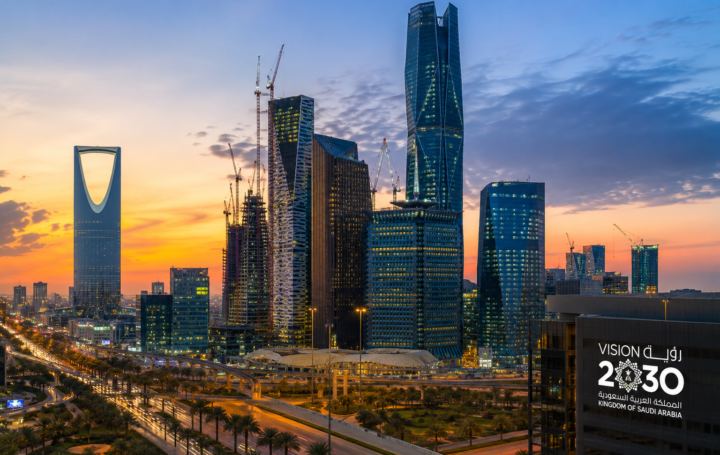
Saudi Arabia’s Vision 2030 Enters Its Value-Realisation Phase
Saudi Arabia is moving from rapid scale-building to value realisation. The decisive question is whether state-led investment can…

Indian Travellers Become a Key Test Market for Middle East Tourism Recovery
The UAE, Saudi Arabia and Oman are looking to India’s outbound travel base as conflict and uncertainty weigh…

Saudi Arabia’s 2026 Budget Deficit Shows Vision 2030 Entering a Harder Spending Phase
The kingdom’s fiscal plan keeps transformation spending alive while signalling sharper discipline around priority sectors and project sequencing.