
UAE Non-Oil Growth Becomes Policy Test for 2026
The UAE’s non-oil economy has become a central marker of national credibility as policy makers seek durable growth beyond energy cycles.

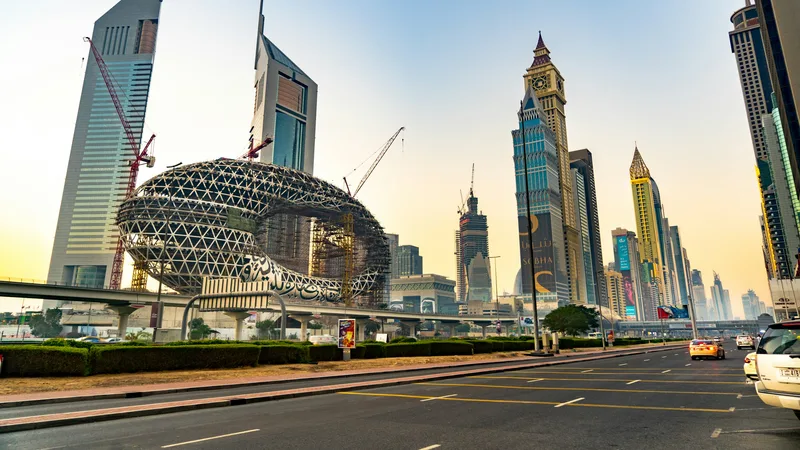
ABU DHABI — The UAE’s non-oil economy has moved from a diversification objective to a credibility test for policy makers, investors and companies using the country as a regional base. The issue is no longer whether the UAE can build sectors beyond hydrocarbons. It is whether those sectors can remain competitive as global demand, capital costs and geopolitical risks shift.
The official frame comes from the Central Bank of the UAE annual reporting and the World Bank UAE macroeconomic assessment, which together show why non-oil performance is now a core measure of policy credibility.
The change is that the non-oil economy is no longer treated as a supporting chapter beside energy. It is now where the UAE’s reputation for execution is tested most visibly. Free zones, ports, airports, financial centres, tourism platforms and digital government all contribute to a system that must remain efficient under pressure.
For boardrooms, the UAE’s appeal lies in its combination of connectivity, regulatory clarity and speed of execution. But competition inside the Gulf is intensifying, especially as Saudi Arabia, Qatar and other markets deepen their own investment and headquarters strategies. That makes policy consistency more important than ever.
The policy signal
The importance is that non-oil activity is the clearest measure of whether diversification has become self-reinforcing. A strong services base can bring foreign companies, skilled labour, professional ecosystems and domestic consumption. But it must be supported by predictable regulation and infrastructure that keeps operating costs under control.
The UAE has long benefited from openness and connectivity. Those advantages remain significant, but they are no longer unique. Other regional governments are investing in logistics, financial markets, aviation and tourism. The UAE’s response cannot rely only on first-mover status. It must keep improving the operating environment for companies already based in the country.
This matters for capital allocation. Investors look for markets where policy direction is clear and execution is visible. If non-oil sectors generate durable demand, the UAE becomes more than a safe regional office. It becomes a platform for regional strategy, capital formation, technology deployment and cross-border trade.
Diversification under scrutiny
The wider context is the UAE’s position as a small domestic market with an outsized regional role. Its growth model depends on connecting external demand to domestic capability. That makes the country sensitive to global trade cycles, travel flows, financial conditions and geopolitical risk, but it also gives it flexibility when policy is well coordinated.
Abu Dhabi and Dubai play different but complementary roles in this model. Abu Dhabi brings sovereign capital, energy depth and long-term industrial policy. Dubai brings trade infrastructure, services, tourism and financial connectivity. The country’s challenge is to make these strengths reinforce one another rather than develop as separate economic narratives.
Competitiveness beyond scale
The next phase of competitiveness will be less about headline scale and more about operating detail. Licensing speed, data regulation, visa policy, dispute resolution, housing supply and transport capacity all shape whether companies expand. For a service-led economy, these details can matter as much as tax rates or promotional campaigns.
The risk is that strong demand hides structural constraints. Rising costs, congestion, pressure on skilled labour and regional competition can gradually reduce the UAE’s attractiveness if they are not managed. The country’s advantage has always been adaptability. The policy question is whether that adaptability can remain visible as the economy becomes larger and more complex.
Signals to track
Watch whether non-oil growth remains broad across trade, logistics, finance, tourism, real estate and digital services. A narrow cycle driven by one or two sectors would be less convincing than a balanced expansion.
Watch the policy response to affordability and talent. The UAE’s ability to attract global professionals depends not only on opportunity but also on schools, housing, transport and long-term residency confidence.
Watch regional headquarters decisions. The UAE remains a powerful base, but companies are increasingly building multi-city Gulf strategies. The country’s task is to remain central to those strategies even as other markets become more assertive.
For editors and analysts, this is why the subject should be followed as an institutional story rather than a single-sector update. The decisive evidence will come from implementation: whether public agencies coordinate, whether private firms commit capital, whether rules remain stable and whether citizens and companies experience measurable improvements.
Outlook
The editorial assessment is that the UAE’s non-oil economy remains one of the region’s most credible diversification stories, but credibility now requires constant renewal. The country’s advantage is not only what it has built. It is the speed with which it can adjust when the market changes.
That adjustment will be judged in practical terms. Companies want efficient regulation, stable costs and confidence that the country will keep investing in the systems that support commerce. The UAE has built a strong platform, but the platform must keep improving.
For the UAE, non-oil growth is now a strategic asset. Its value will depend on whether it continues to produce depth, resilience and institutional trust, not only strong activity in a favourable cycle.
Sources and context
More from Capital & Sovereign Wealth Desk
Saudi Arabia’s Vision 2030 Enters Its Value-Realisation Phase
Saudi Arabia is moving from rapid scale-building to value realisation. The decisive question is whether state-led investment can…
Southern Lebanon Returns Begin, but the Risk of a Fragile Peace Remains
Families are reopening homes and businesses in the south, yet destruction, uncertainty and low-level hostilities continue to shape…
Hamas Move to Transfer Gaza Authority Opens a New Test for Reconstruction
The proposed shift to a UN-backed technocratic committee raises immediate questions over weapons, governance and who can control…